Read the Thermometer, Not the Calendar: A Kayak Angler's Water Temperature Playbook
Here's a habit worth breaking: planning your bass fishing around the calendar. March doesn't automatically mean pre-spawn. August doesn't automatically mean a dead midday bite. The fish don't have smartphones. They don't know what month it is. What they respond to — consistently, predictably, year after year — is water temperature.
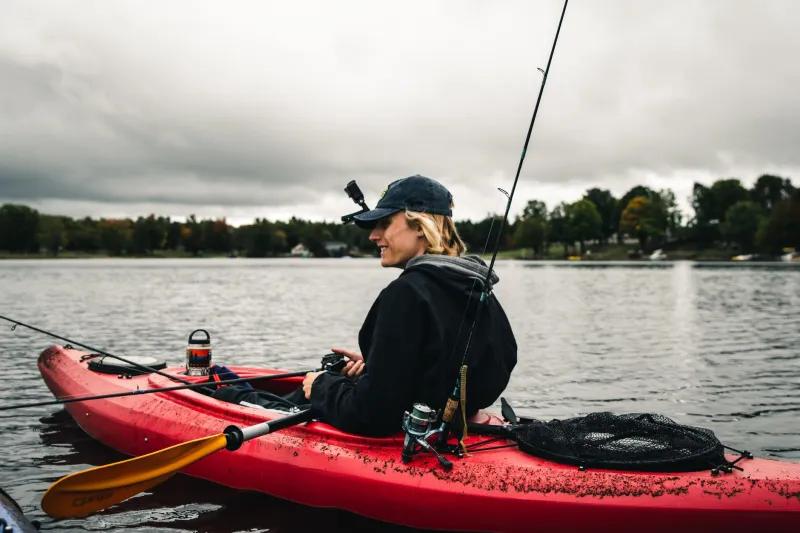
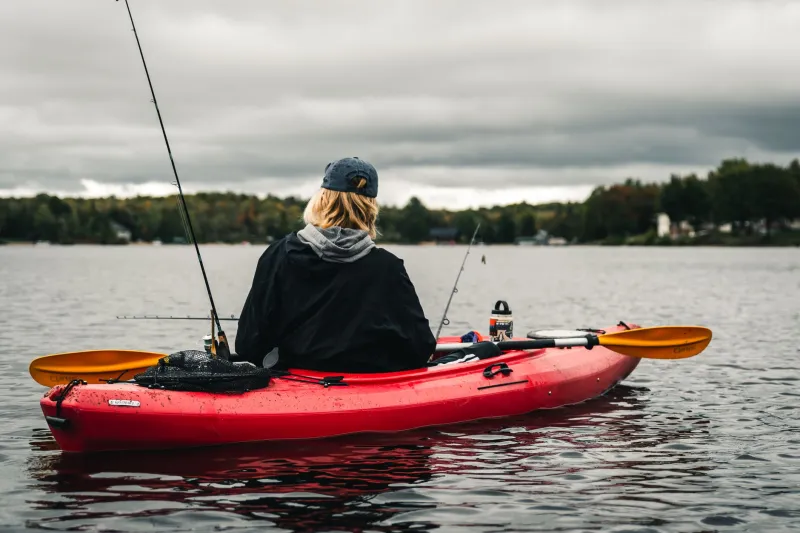
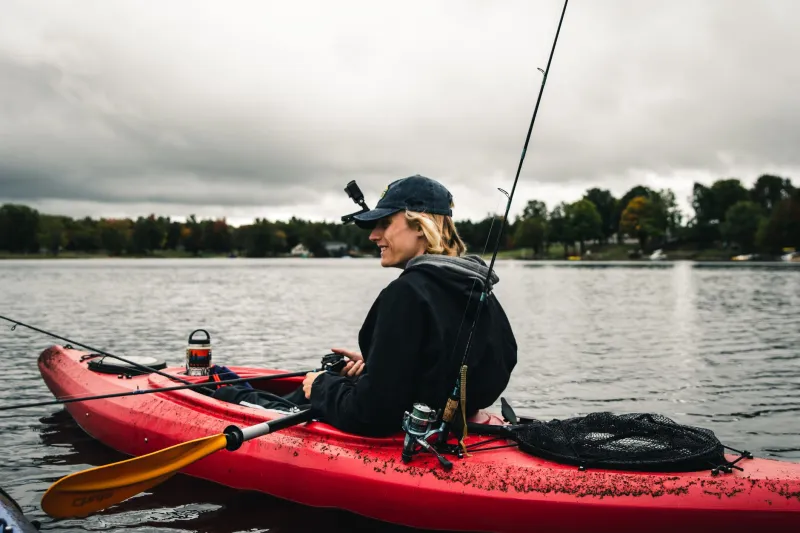
For kayak anglers, a quality surface thermometer or a fish finder with a temp sensor is one of the most underused tools in the arsenal. Once you start building decisions around actual water temperature rather than vague seasonal assumptions, patterns start clicking into place in a way that feels almost unfair. Here's the full breakdown, range by range.
Under 50°F — Deep, Slow, and Metabolically Checked Out
Below 50 degrees, largemouth bass are in survival mode. Their metabolism slows dramatically, their need to feed drops, and they congregate in the warmest water available — typically the deepest sections of the lake, near submerged channel edges, or in the backs of pockets where shallow water warms even slightly faster than the main basin.
What to throw: Finesse is king. Drop shots, shaky heads, and small jigging spoons worked painfully slowly. When water temps are in the 40s, a bass will rarely chase anything. You need to put the bait right in front of its face and leave it there.
Kayak positioning: Don't waste time on shallow flats. Use your fish finder to locate depth changes and transition areas. Slow presentations from a stationary position — deploy your anchor or stake out — will outfish any run-and-gun approach by a wide margin.
Pace: Long pauses. We're talking 15 to 30 seconds between movements on a drop shot. Cold bass are not aggressive bass.
50°F to 58°F — The System Starts to Wake Up
Once temps climb into the low-to-mid 50s, bass begin moving shallower during the warmest parts of the day — typically late morning through early afternoon on sunny days when the sun has had time to warm the shallows. This is when you start seeing transitional movement from deep winter haunts toward staging areas.
What to throw: Suspending jerkbaits are tailor-made for this temperature window. A long pause — three to five seconds — between twitches mimics dying baitfish and draws reaction strikes from bass that aren't quite ready to commit to aggressive feeding. A slow-rolled swimbait along the bottom can also produce.
Kayak positioning: Focus on dark-bottom coves, rip-rap banks that absorb solar heat, and any shallow area that gets direct sun exposure for most of the day. These micro-environments can run two to three degrees warmer than the main lake and act like magnets during the warming trend.
Paddle strategy: Work north-facing banks last. South-facing banks catch more sun and warm faster in winter and early spring — a consistent edge on cold-water lakes throughout the South and Midwest.
59°F to 65°F — Pre-Spawn Ignition
This is one of the most productive windows of the entire year, and kayak anglers are uniquely positioned to capitalize on it. Bass are moving shallow, staging near spawning areas, and actively feeding to build energy reserves. They're not locked onto beds yet, which means they're catchable in numbers and in locations you can actually reach from a kayak.
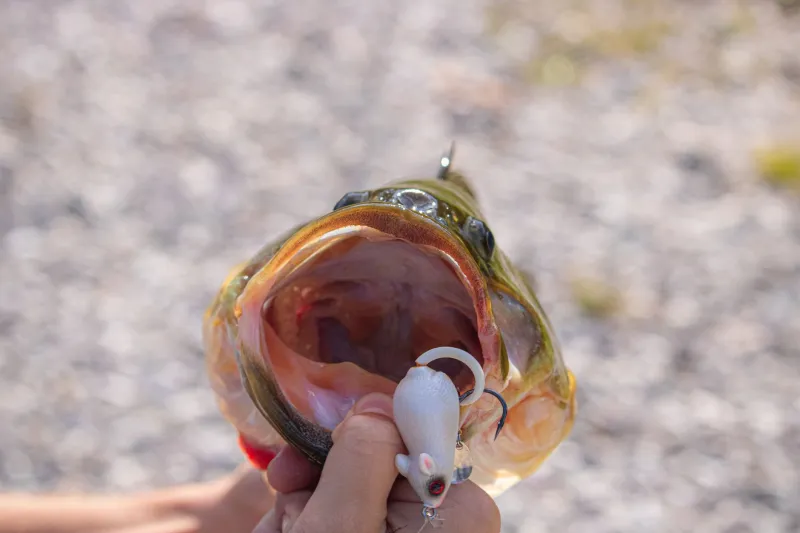
What to throw: Reaction baits start producing reliably here. Lipless crankbaits, shallow-running squarebills, and bladed jigs are all effective. Soft plastics — particularly creature baits and beaver-style trailers on a Texas rig — work well in and around the staging structure.
Kayak positioning: Look for the transition between deeper staging areas (8 to 15 feet) and spawning flats. Bass are moving back and forth through these transitions, and a kayak lets you position quietly right on the edge without blowing up the spot the way a gas motor would.
The trigger: Warming trends accelerate everything in this range. A two- or three-degree bump over a few consecutive sunny days can push fish from staging to actively moving onto the flats almost overnight.
66°F to 72°F — Full Spawn Mode
Bass are on beds. Males are guarding. Females have either just spawned or are about to. Fishing pressure on public lakes spikes, tournaments stack up at the ramp, and the bite can be simultaneously incredible and frustrating depending on where you're at in the cycle.
What to throw: Sight fishing with finesse lures — small tubes, Ned rigs, drop shots — works when you can spot beds visually. If you're not sight fishing, a slow-rolled swimbait or a finesse jig around spawning structure (laydowns, dock pilings, shallow rock piles) will pick off fish that are transitioning.
Kayak positioning: Here's where the kayak earns its keep. You can ghost into inches-deep spawning flats without the wake and noise that a bass boat produces. Polarized sunglasses are mandatory. Approach angles matter — stay low, move slow, and position yourself so your shadow doesn't fall across the bed.
Note: Many serious kayak anglers choose not to target bedded fish out of conservation ethics. It's a personal call, but it's worth knowing where you stand before you're staring at a 5-pound female on a bed.
73°F to 80°F — Post-Spawn Transition and Early Summer Feed
Post-spawn bass are scattered and recovering, but they're also hungry. The frantic, focused energy of spawn season gives way to a more opportunistic feeding pattern. Bass start moving into summer patterns — shad-oriented, structure-oriented, and increasingly tied to shade and oxygen levels as surface temps climb.
What to throw: Topwater shines in this range, especially early morning and late evening. Poppers, walking baits, and hollow-body frogs around vegetation are all deadly. During midday, flip a punching rig into matted grass or throw a swim jig along weed edges.
Kayak positioning: Vegetation becomes a primary target. Hydrilla edges, lily pad fields, and emergent grass hold post-spawn bass that are using the cover for ambush feeding and shade. A kayak can work the inside edges of grass that a boat can't reach.
81°F to 88°F — The Dog Days Grind
High summer is a test of commitment. Surface temps push into the 80s, dissolved oxygen levels drop in shallow water, and bass move to find thermal refuge. They're still catchable — often very catchable — but the timing and depth equation shifts significantly.
What to throw: Deep-diving crankbaits, Carolina rigs, and football jigs working ledges and channel swings. Early morning topwater is still viable in the first hour of daylight before surface temps spike. Punch rigs into heavy mat — the thick vegetation creates a cooler, oxygenated micro-environment underneath.
Kayak positioning: Depth and shade. Period. Main lake points that drop sharply, bridge pilings, dock shadows, and matted vegetation. Don't waste energy paddling shallow flats in 85-degree water at noon — you'll exhaust yourself and find very few fish.
Paddle timing: Launch early. Be on the water before first light if you can manage it. The window between dawn and 9 a.m. is often the entire ballgame in midsummer.
65°F to 72°F (Falling) — The Fall Reload
Same temperatures as the pre-spawn window, but the direction of change makes all the difference. Falling temps in autumn trigger an aggressive feeding response as bass bulk up for winter. Shad move shallow in massive schools, and bass follow them.
What to throw: Match the hatch. Shad-colored crankbaits, swimbaits, and spinnerbaits worked along shad-holding structure. Topwater can be spectacular during fall blowups when bass push shad to the surface.
Kayak positioning: Follow the bait. If you can locate shad schools — look for nervous water, birds working, or surface activity — the bass won't be far behind. A kayak lets you silently intercept these feeding events without pushing them down.
The Thermometer Is Your Best Fishing Partner
A $20 surface thermometer clipped to your kayak or a fish finder with a built-in temp sensor gives you the single most actionable data point available on any given fishing day. Stop asking what month it is. Start asking what the water temperature is. The bass already know the answer — now you do too.