Let Tournament Anglers Do Your Homework: How Kayak Fishermen Can Poach Patterns Without Paying an Entry Fee
Every spring, a few hundred tournament anglers descend on some well-known reservoir, spend a week running every corner of it in $80,000 boats, and then spill every useful detail about what they found — on weigh-in stages, in post-tournament interviews, and all over social media. Then they load up and drive to the next event.
And most recreational anglers just... don't pay attention.
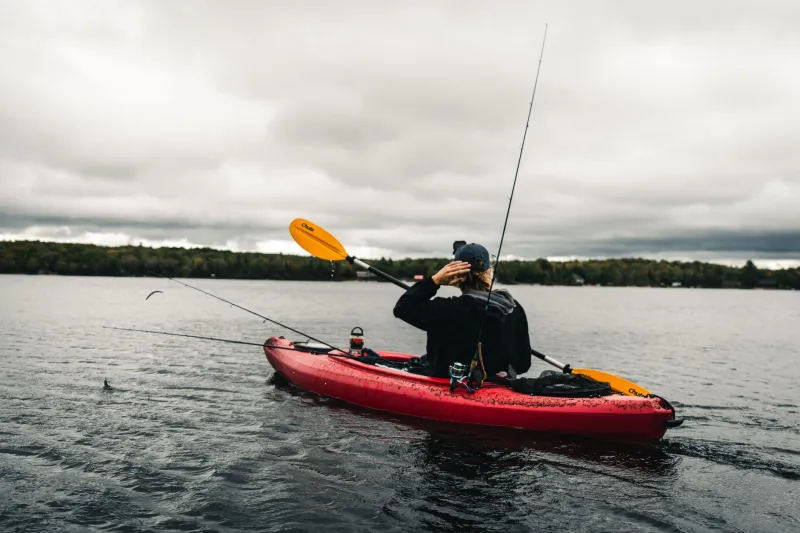
If you fish from a kayak, that's a mistake you can't afford to keep making. You're already operating with an edge — low profile, silent approach, access to skinny water those tournament rigs can't touch. Add a little intelligence gathering to that equation, and you're not just fishing smarter. You're fishing with a map that other people paid to draw.
Here's how to do it right.
Why Tournament Waters Are Actually Great for Kayak Anglers
Conventional wisdom says to avoid lakes right after a major tournament. Too much pressure, too many spooked fish, too much boat traffic. And sure, if you're showing up the day after a 200-boat field just churned through every productive flat on the lake, you might want to wait a week.
But here's the flip side: tournament anglers study those bodies of water harder than anyone. Pre-fish periods can last five days. Pros are running GPS tracks, marking waypoints, and testing patterns across every seasonal condition the lake has to offer. Then — and this is the part people miss — they talk about it publicly.
Weigh-in emcees ask direct questions. "Where were you fishing?" "What were they biting on?" "How deep?" Pros answer. Sometimes vaguely, sure, but often with enough detail that a patient listener can triangulate exactly what's happening on that body of water.
Your kayak lets you sneak into the exact spots those anglers described, without the pressure of competition and without the boat traffic that follows tournament weeks.
Mining the Public Record
Start with the tournament's official results page. Major circuits like Major League Fishing, the Bassmaster Opens, and local federation events publish weight totals, finishing positions, and often basic pattern summaries. Cross-reference day-by-day weights — if a guy caught 22 pounds on day one and 14 on day two, something changed. Weather shifted, the bite moved, or the pressure pushed fish somewhere new. That progression tells a story.
Next, go to YouTube. Post-tournament interviews are gold. MLF in particular runs long-form content where pros walk through their entire week — what they found in practice, what held up during competition, what fell apart. Watch these with a notepad. You're looking for specific structural references: "I was fishing a secondary point on the upper end," or "they were stacked on the first ledge break off the main river channel." Pull up a topo map while you watch and start marking likely candidates.
Don't sleep on Instagram and Facebook either. Pros and co-anglers post throughout tournaments — photos of fish, location tags, tackle shots. Even a background detail in a photo can tell you something about water color, depth, or vegetation type. Follow the top finishers from any event held on water you plan to fish. Their feed becomes a free scouting report.
Reading Between the Lines of Winning Patterns
Pros rarely give away exact GPS coordinates, but they do describe patterns in ways that are replicable if you know what to listen for. "I was running a swimbait through submerged timber on the back end of a creek" is enough. You know the bait category, the structure type, and the general location. Now go find that on your topo map.
Pay close attention to depth references. If a pro says fish were suspended at 12 feet over 20-foot water, that's a specific setup you can find on almost any reservoir with a decent contour map. The bass aren't unique to one spot — they're responding to a condition. Find similar conditions elsewhere on the lake, and you've found fish that nobody else is targeting.
This is where kayak anglers have a serious advantage. Tournament boats hit the well-known, high-percentage spots. They have to — they're fishing for money and time is short. But a kayak angler with a half-day and no pressure to perform can work the secondary version of that pattern. The less-accessible cove. The back of the back of the creek. The shallow flat that's a pain to reach without a paddle craft. That's where fish push after tournament pressure, and that's exactly where you want to be.
Timing Your Trips Around Tournament Schedules
Don't fish the same week as a major tournament unless you enjoy dodging boats and fishing behind pressured fish. Instead, look at the event calendar and plan around it strategically.
The week before a tournament — especially the official practice period — can be surprisingly productive. Pressure is moderate, fish are still on natural patterns, and the lake hasn't been beaten up yet. Show up then, fish casually, and pay attention to what you're finding. Compare notes later with how the tournament actually played out.
Two to three weeks after a tournament is also prime time. Fish have recovered, pressure has dropped off, and you now have a full tournament's worth of publicly available pattern data to work with. That's the sweet spot — you're fishing with intel that was literally just proven on that water.
The Ethics of the Whole Thing
Let's be clear: there's nothing shady about any of this. Tournament results and interviews are public information. Fishing publicly accessible water is your right as an angler. You're not stealing anything from anyone.
What you're doing is paying attention. You're treating publicly available information as the resource it actually is, instead of scrolling past it. Tournament anglers share these details because it builds their brand and promotes the sport. Using that information to catch more fish is exactly what they'd want you to do.
Just don't be the guy who paddles up to a tournament angler mid-competition and starts asking questions. Read the room. Respect the event. But once it's over and the results are posted? That's your playbook.
Putting It Together on the Water
Before your next trip to a tournament-circuit lake, spend 30 minutes doing homework. Pull the most recent event results. Watch one or two post-tournament interviews. Cross-reference any pattern details with a topo map of the lake. Mark two or three structural areas that match what the top finishers described.
Then load the yak, hit the water early, and work those areas with the baits that matched the winning pattern — or close variations of them. You might not replicate a tournament-winning bag. But you'll fish with more confidence, more direction, and more likely than not, more fish.
Tournament anglers spend thousands of dollars and hundreds of hours figuring out these lakes. All you have to do is pay attention after they leave.
That's not cheating. That's just smart fishing.