Four Seasons, One Kayak: A Bass Angler's Year-Round Playbook
Four Seasons, One Kayak: A Bass Angler's Year-Round Playbook
Most kayak anglers have a season. Maybe it's spring, when the pre-spawn buzz is electric and every shallow cove feels like a sure thing. Maybe it's fall, when the air cools down and the bass go on a binge. But here's the thing — bass are catchable every single month of the year, and the anglers who figure that out are the ones who consistently put fish in the yak.
The trick is understanding that bass aren't just "active" or "inactive." They're always doing something. They're feeding, staging, recovering, chasing, or suspending — and every one of those behaviors has a location, a depth, and a presentation attached to it. Your job is to show up with the right plan.
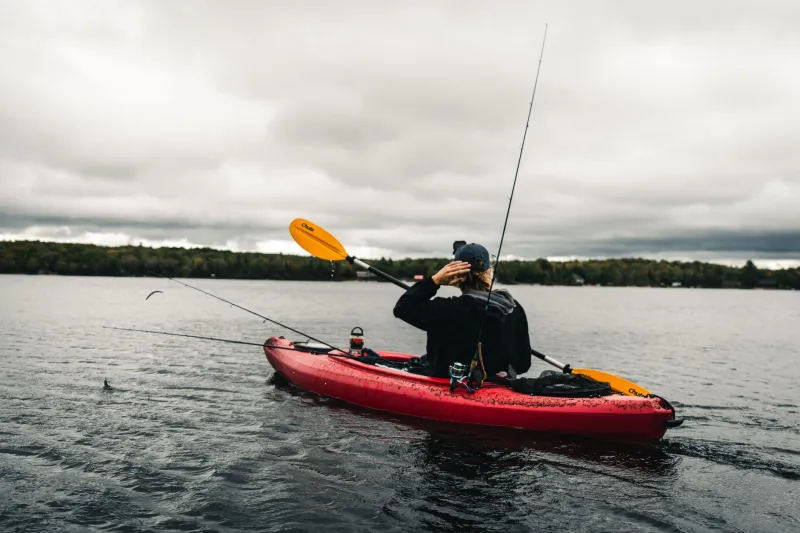
And here's where the kayak becomes your unfair advantage. No wake. No noise. No displacement. You can ease into water that a bass boat would've blown out before you even rigged up. That low-profile access is the thread that runs through every season on this list.
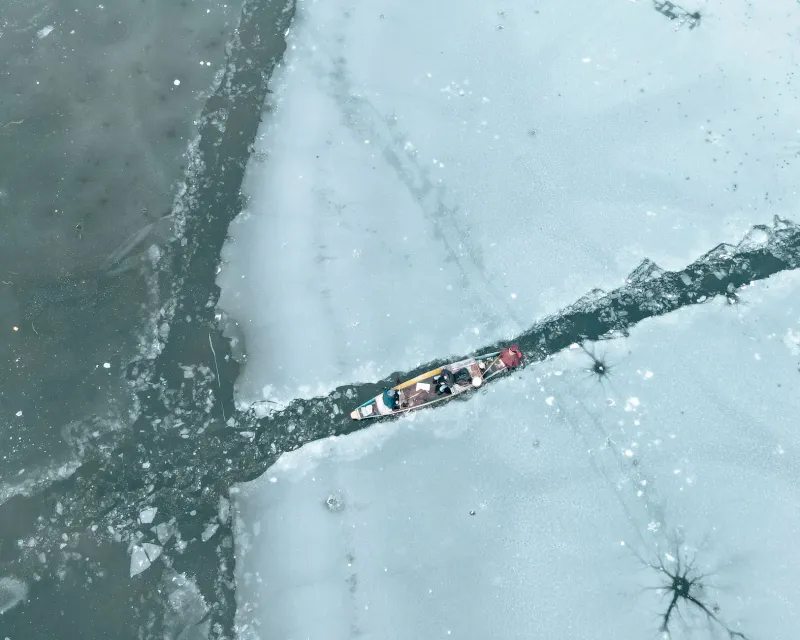
Winter: Slow Down or Go Home
Winter bass fishing isn't dead — it's just operating on a different clock. When water temps drop below 50°F, largemouths pull off the banks and cluster near the warmest available structure. Think deep channel edges, submerged points, and any dark-bottomed flat that soaks up a little extra sun. On reservoirs, look for main lake humps that top out at 15 to 25 feet. On natural lakes and rivers, target the deepest bends and outside turns.
The kayak shines here for one specific reason: you can hover. Anchor up or use a stake-out pole in shallow water, and work a single piece of structure methodically without drifting off it every 30 seconds. Drop a finesse jig or a heavy shaky head straight down, lift it, let it fall, and repeat. The bite will feel like nothing — just a little extra weight or a slight tick. Set the hook anyway.
Presentation matters more in winter than any other season. Slow is rarely slow enough. If you think you're fishing too slow, cut your retrieve speed in half and start there.
Spring: The Season Everyone Shows Up For
Spring is the great equalizer. Bass are on a mission — they need to eat, they need to move shallow, and they need to spawn. That mission makes them aggressive and predictable, which is why every angler with a rod and a boat shows up for it.
But not every angler can get to the fish. Spawning bass love ultra-shallow flats — grass mats, flooded willows, buck brush, lily pad fields — water so skinny that even a jon boat has to think twice. A kayak? You're in. You can paddle through 10 inches of water and not spook a fish on a bed 30 feet ahead of you.
In early spring, target the transition zones — the secondary points and creek channel edges that bass use to stage before they push shallow. A swimbait or a jerkbait worked at medium depth will intercept those fish on the move. As the water warms into the mid-60s, shift your attention to the shallowest, darkest-bottomed areas you can find. A big female on a bed is not subtle. Sight fishing from a kayak is one of the most satisfying things in the sport — you're low enough to see into the water, quiet enough not to blow the fish off, and mobile enough to reposition without making a scene.
Don't overlook the post-spawn window either. It gets skipped over constantly. The males are still guarding fry in the shallows, and they're aggressive. A small topwater or a buzzbait thrown tight to cover will get hammered.
Summer: Find the Shade, Find the Bass
Summer splits bass into two camps: the ones that go deep to find comfortable water temps, and the ones that stay shallow under heavy cover where the sun can't reach them. Your job is figuring out which camp is more active on any given day — and then getting there before the sun gets too high.
Dawn is everything in summer. The first two hours after sunrise are often the only window where shallow bass are truly on the feed. That's when topwater earns its keep. Frogs over slop, poppers along shaded banks, hollow-body walking baits down dock lines — if you're not on the water before 7 a.m. in July, you're fishing the leftovers.
Once the sun climbs, go deep or go home. Brush piles, offshore humps, and submerged timber in 15 to 25 feet of water will hold suspended bass that can be picked apart with a drop shot or a football jig. Kayak anglers who invest in a quality fish finder will find this stuff fast. Those who don't will spend a lot of time guessing.
One underrated summer move: target shaded banks on rivers and tidal systems in the afternoon. Current-washed bluffs, overhanging trees, and deep-cut bends create thermal refuge that bass use heavily when the lake is cooker-hot in open water.
Fall: Chase the Bait, Find the Bass
Fall is chaos — and that's exactly what makes it great. As water temps drop back into the 60s, bass follow shad and other baitfish out of the depths and onto the flats, into the creeks, and along the riprap. They're feeding hard to pack on weight before winter, and the windows of activity can be fast and furious.
The key to fall is mobility. You need to cover water until you find where the bait is stacked, then slow down and work that area thoroughly. A kayak is perfect for this. Paddle a shoreline fast, throwing a spinnerbait or a lipless crankbait. When you get bit, stop. Work that zone. Then keep moving.
Creek arms on reservoirs are a consistent fall magnet. Bass push back into these areas following threadfin shad, and the action can be nonstop on the right morning. On smaller natural lakes, look for points adjacent to deeper water — bass will use those as ambush spots while bait schools move along the flat.
As fall deepens and water temps slide back toward the low 50s, the pattern starts to look more like winter again. Bass get a little sluggish, the bite slows, and you're back to finesse presentations on deeper structure. But for about six weeks in most of the country — call it late September through mid-November — fall fishing is as good as it gets.
The Year-Round Edge
Here's what ties all of this together: the angler who pays attention to water temperature, bait movement, and structural transitions will always out-fish the one who just shows up and casts. Bass behavior is predictable once you understand the seasonal logic behind it.
And the kayak? It removes the barriers. You can access the skinny water of spring without spooking fish. You can anchor silently over a winter brush pile. You can ease into a shaded summer creek without making a sound. You can cover fall flats quickly and quietly, getting first crack at fish that haven't seen a lure all week.
Four seasons. One kayak. No excuses to stay off the water.