Stop Fighting the Wind — Start Following It to Bass
Every angler has been there. You pull into the ramp parking lot, step out of the truck, and feel it — that steady push of wind that makes the surface look like hammered tin. Half the guys with bass boats are already packing up and heading to the diner. The other half are grumbling into their thermoses.
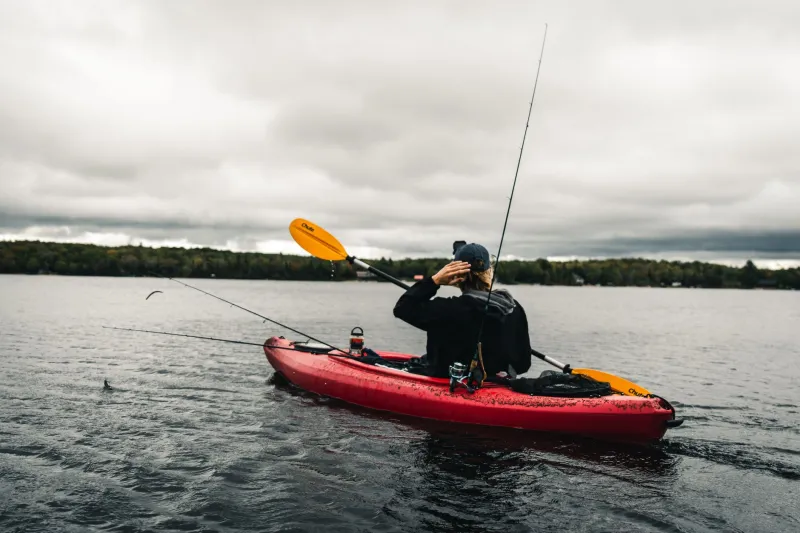
You? You're smiling. Because you paddle a kayak, and you've figured out something most people on the water haven't: wind doesn't scatter bass. It concentrates them. And a low-riding yak with a quiet paddle is the perfect tool to get at them.
Why Wind Changes Everything for Bass
Bass are opportunists. They didn't survive millions of years of evolution by ignoring free meals, and wind delivers free meals in bulk. When steady wind pushes across a lake or reservoir, it doesn't just ruffle the surface — it sets off a chain reaction that reorganizes the entire food web.
First, surface water gets pushed toward the downwind shoreline. That wind-driven current carries plankton, insects, and suspended debris. Baitfish — shad, bluegill fry, perch — follow the food. Bass follow the baitfish. It's that simple, and it happens every single time the wind blows with any consistency.
On top of that, wind creates a thermocline disruption in warmer months. Cooler, oxygenated water gets churned into the upper column. Bass that were hugging deep structure in the heat of the day suddenly have a reason to slide shallower. Wind essentially sets the table.
Power boaters know this in theory. The problem is execution. A 20-mph bass boat approaching a wind-blown flat sounds like a freight train to every fish in three feet of water. You, in a kayak, drifting in quietly from upwind? You're a ghost.
Reading the Wind Before You Ever Launch
The work starts before you hit the water. Check wind direction and sustained speed — not just gusts — for the morning. Apps like Windy or Weather Underground give you localized forecasts that are far more useful than a general regional outlook.
On a map or satellite image of your lake, identify the downwind shorelines and points. These are your primary targets on a windy day. Look specifically for:
- Windward points that jut into open water — Bass stack on the leading edge of these structures to ambush baitfish getting swept past.
- Shallow, wind-blown flats — If the bottom is between two and six feet deep and the wind has been blowing into it for a few hours, there are almost certainly bass working the edges.
- Coves with a single open mouth facing the wind — These funnel blown bait inside and concentrate everything, including predators.
- Riprap or rocky shorelines on the downwind bank — The wave action stirs up crawfish and other forage. Bass know it.
Avoid the upwind shoreline on most windy days. It'll be calm and clear — which sounds nice, but the bait has already left. So have the bass.
Using Surface Chop as a Fishing Tool
Here's where kayak anglers get a serious edge that most people never talk about: surface chop is visual cover. When the water surface is broken and choppy, bass in shallow water feel far less exposed. They push shallower and feed more aggressively than they would on a slick, calm day when overhead visibility is perfect.
That same chop that makes a bass boat operator nervous about hull slap and spray? It's your best friend. It breaks up your silhouette on the surface. It masks the sound of your paddle. It lets you drift within casting range of fish that would otherwise blow out at thirty yards.
Learn to read what the chop is telling you. Light ripple — under ten mph — creates subtle current and mild bait movement. Moderate chop — ten to twenty mph — is often the sweet spot. Bass are active, bait is concentrated, and you can still cast accurately. Heavy chop above twenty mph starts to make accurate presentations difficult, and fish can get pushed into tighter, more specific ambush zones rather than spreading across a flat.
Lure Selection When the Wind Is Up
Calm-water finesse tactics don't always translate to windy conditions, and adjusting your rod isn't just about fighting the wind — it's about matching what the fish are experiencing.
Choppier water calls for reaction baits. Spinnerbaits are made for this. The blade flash cuts through off-color, wind-stirred water, and the vibration gives bass a target when visibility drops. A half-ounce Colorado or tandem-blade spinnerbait worked along a wind-blown point is a classic combination for good reason.
Topwater can absolutely work in chop — don't let anyone tell you otherwise. A popper or walking bait on a wind-blown flat in the morning will draw strikes that would never happen on a calm day. The broken surface actually makes topwater more forgiving. Fish can't inspect it as closely. They just eat it.
Swim jigs and chatterbaits thrive in wind-agitated water. The irregular current gives them natural action without much rod input. Let them swing through seams in the current where baitfish are getting pushed.
Drop the finesse stuff unless you're in a very specific scenario — like a calm pocket inside a wind-blown cove where fish have funneled in and settled. In that case, a shaky head or Ned rig along the bottom can clean up.
The Approach: Letting the Wind Work For You
Here's where the kayak angler's advantage becomes almost unfair. Instead of fighting the wind with a trolling motor, use it. Position yourself upwind of your target zone and let the kayak drift naturally toward the structure. A small anchor or stake-out pole keeps you stationary when you find the right spot.
Drift fishing a wind-blown bank is one of the most effective and underused techniques in kayak bass fishing. You cover water efficiently, your presentation stays natural, and you never make the kind of noise that sends a flat of shallow bass scattering into deep water.
If you need to reposition, paddle upwind and drift again. Repeat the same drift two or three times before moving on. Bass often sit tight and take multiple passes to trigger.
The Takeaway
Wind is a filter. It filters out the anglers who only want comfortable conditions, and it rewards the ones willing to think about what's actually happening beneath the surface. Kayak anglers who embrace windy days aren't just being tough — they're being smart.
Next time the forecast shows a sustained fifteen-mph blow and the bass boat crowd is already talking about coming back tomorrow, load the yak. Find the downwind bank. Let the wind carry you in quiet. The bass will be there, and odds are, you'll have them all to yourself.