Shallow, Slow, and Deadly: Why Solo Kayak Anglers Are Quietly Winning the Bass Fishing Arms Race
There's a particular kind of satisfaction that comes from paddling back to the ramp with a limit — especially when the $60,000 bass rig two docks over is coming in empty. It doesn't happen by accident. And if you've spent any time fishing from a kayak, you already know the secret: the fish don't care how much your boat cost. They care about where they're hiding. And right now, solo kayak anglers are the ones finding them.
This isn't just feel-good talk for guys who can't afford a Ranger. The numbers, the tournament results, and the real-world accounts from paddlers across the country are telling a consistent story — one that the bass boat crowd probably doesn't want to hear.
The Access Advantage Nobody Talks About
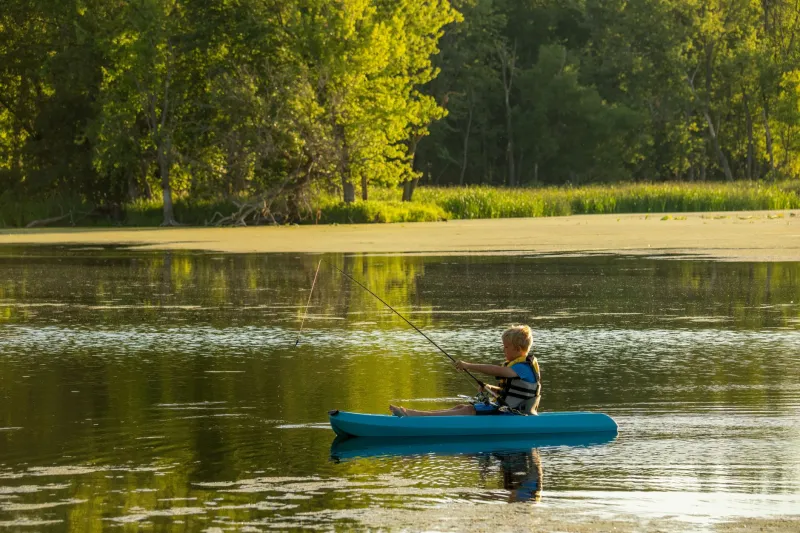
Let's start with the obvious. A fully rigged tournament bass boat draws anywhere from 18 to 24 inches of water. A sit-on-top fishing kayak? Maybe five or six inches on a good day. That difference isn't just a fun fact — it's the entire ballgame.
Bass, especially largemouth, love structure. Laydowns, submerged brush piles, flooded timber, grass mats, dock pilings in coves so shallow a johnboat would scrape bottom getting close. These are the exact spots that tournament boats idle past, maybe lob a long cast toward, and then move on. A kayak angler doesn't move on. He paddles straight into it, gets within 15 feet of the target, and drops a bait precisely where it needs to go.
Talk to almost any serious kayak bass angler and they'll describe the same experience: gliding into a pocket of flooded willows that's completely unfishable from a conventional boat, and finding bass stacked up like they've never seen a lure in their lives. Because they probably haven't.
"I fished a creek arm last spring that had a submerged fence line running through maybe eight inches of water," said one tournament kayak angler from Tennessee. "There were three other boats on that lake that day. None of them even looked at that pocket. I caught seven keepers off that fence in two hours."
That's not luck. That's access.
What the Kayak Bass Series Is Proving
The Kayak Bass Series — one of the largest dedicated kayak fishing tournament circuits in the country — has been quietly building a body of evidence that solo paddle anglers aren't just competitive, they're legitimately elite fishermen.
KBS events routinely draw hundreds of competitors across multiple states, and the catch rates in quality fisheries are impressive by any standard. More telling is where those fish are being caught. Post-tournament breakdowns and angler reports consistently point to ultra-shallow structure, back-of-the-cove targets, and tight-cover scenarios that conventional tournament boats simply can't access efficiently.
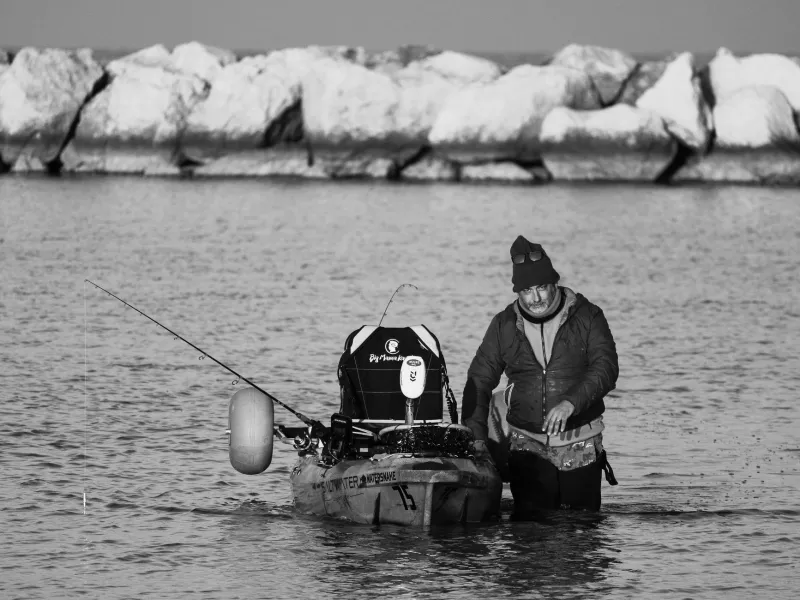
The format itself reinforces the advantage. In KBS-style events, it's one angler, one kayak, no trolling motor, no co-angler, no graph blaring on a 12-inch screen. Just the paddler, the rod, and whatever stretch of water they've decided to commit to. That simplicity strips away a lot of the noise — and forces a different kind of decision-making that, it turns out, often leads to better fish.
The Slow Game Is a Cheat Code
Here's something that doesn't get enough credit: kayak anglers fish slower. Not because they're lazy — because the physics of the platform demand it. And slower, in bass fishing, is almost always better.
A bass boat running at idle is still pushing water. It's still creating pressure waves, motor noise, and vibration. A kayak drifting on a slight wind or being quietly hand-paddled into position is essentially silent. You can ease up on a bedding fish, a shaded dock piling, or a blowdown without telegraphing your arrival. Bass in pressured water — and these days, almost all public water is pressured — are acutely sensitive to boat traffic. Kayak anglers sidestep that problem entirely.
Slowing down also means spending more time on productive water. Tournament boat anglers are notorious for burning miles searching for "the spot." Kayak anglers tend to pick an area and work it methodically, hitting every piece of visible structure, every depth change, every irregular feature along a bank. That thoroughness pays off.
Going Solo Isn't a Limitation — It's a Philosophy
There's a mental component to this that deserves honest discussion. Solo fishing from a kayak requires a certain self-reliance that changes how you think about the water. You're not bouncing decisions off a co-angler. You're not following someone else's game plan. Every choice — where to launch, which bank to work, what bait to tie on — is yours.
That accountability sharpens your instincts over time. Kayak anglers who put in the hours develop a read on water that's hard to replicate when you're always fishing with a partner or deferring to a fish finder. You start noticing things: the way a certain grass edge breaks off, the subtle color change that signals a depth transition, the way a bass blew up on a shad 40 yards down the bank and what that tells you about where to cast next.
It's a more intimate relationship with the fishery. And that intimacy, over time, translates directly into fish.
Gear and Mindset Tips for Making the Switch
If you're ready to ditch the crowd and start fishing the water everyone else is ignoring, here's where to start:
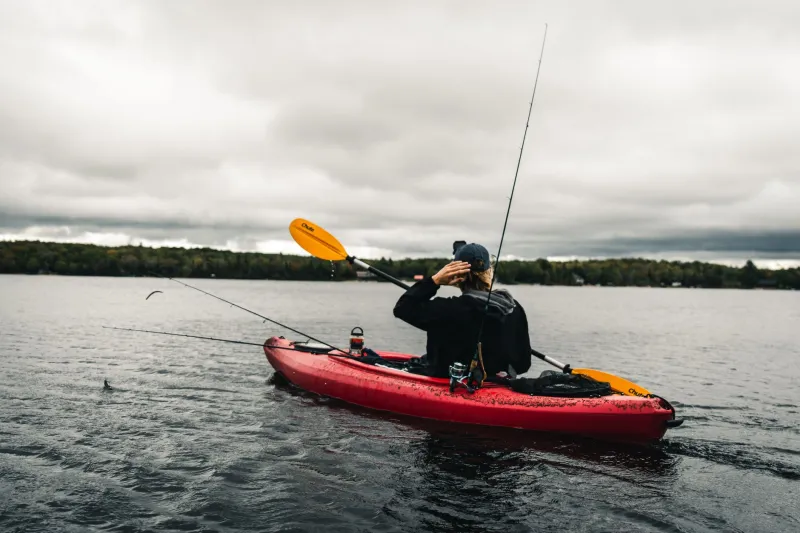
Keep the rig light. The beauty of a kayak setup is its simplicity. Resist the urge to load every rod holder and accessory mount. A well-chosen three-rod rotation — a flipping stick, a medium-heavy casting rod, and a spinning rod for finesse — covers 90% of kayak bass scenarios.
Master boat control first. Learning to hold position in wind and current without a trolling motor is the single most valuable skill a kayak angler can develop. Practice anchoring with a stake-out pole or drag chain in different conditions before you try to fish competitively.
Study the map before you paddle. Use satellite imagery and topo maps to identify the shallow pockets, creek arms, and back-country coves that boat traffic can't reach. Those are your spots. Own them.
Fish the skinny water confidently. A lot of anglers are timid about pushing into really shallow cover. Don't be. If your kayak can float there, the bass don't expect you. That's your entire edge — use it.
Embrace the slow pace. Stop thinking about covering water and start thinking about dissecting it. One productive 200-yard stretch, fished thoroughly and carefully, is worth more than three miles of half-hearted casts from a running boat.
The Quiet Revolution on the Water
Tournament bass fishing has always rewarded the angler who finds fish nobody else is targeting. For decades, that meant better electronics, faster boats, and more horsepower. But there's a ceiling on what all that gear can do — and it stops at the edge of the shallow water.
Kayak anglers live past that edge. They paddle into the places the bass boats can't follow, work the water at a pace that doesn't spook anything, and come back to the ramp with fish that nobody saw coming.
It's not a budget workaround. It's a legitimate tactical advantage. And the solo kayak anglers who've figured that out? They're not in a hurry to explain it to the tournament boat crowd.
Paddle out. Cast deep. Fish the water they can't reach.