Lights Out, Lines In: The Complete Guide to Kayak Bass Fishing After Dark

Somewhere around 9 p.m. on a mid-July night, while the boat ramp parking lot empties out and the last trailer pulls away, something shifts on the water. The surface goes glassy. The frogs start hollering. And the bass — the ones that spent all day sulking in the thermocline — start moving shallow with bad intentions.
Most anglers never see it. They packed up at sunset, drove home, and called it a good day. But a quiet, growing group of kayak anglers has figured out what happens after the crowd leaves. And they're not talking about it much, either.
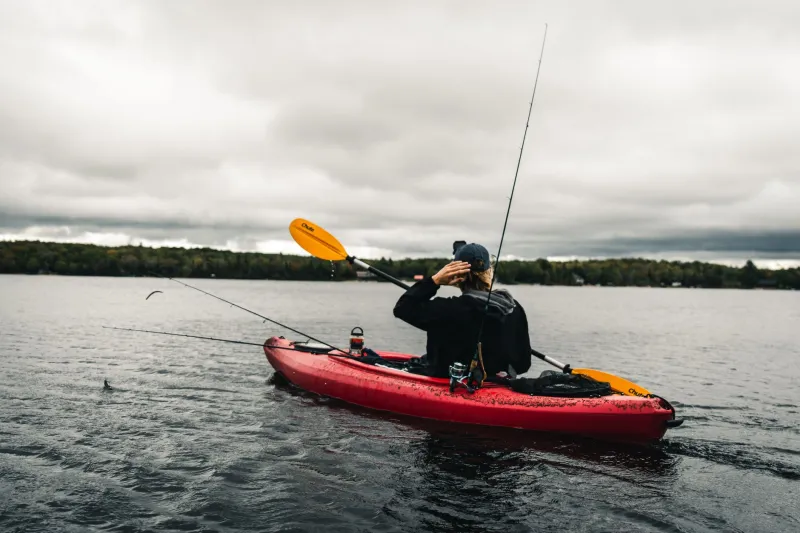
Night fishing from a kayak is part adventure, part chess match, and part sensory experience you genuinely can't get any other way. You're low to the water, nearly silent, and completely dialed into every sound and vibration around you. It's a different kind of fishing — and for bass, it's often the best kind.
Here's how to do it right.
Why Bass Go Absolutely Bonkers After Dark
Bass are ambush predators, and darkness is their best friend. Water temperatures that have been cooking all day start to drop after sunset, and bass that were buried under docks or hugging the deepest available shade begin to creep into the shallows to feed aggressively. In the summer especially, the night bite can outperform the morning bite by a wide margin.
Topwater action in particular gets downright explosive. Bass use their lateral line — a sensory organ that detects vibration and pressure changes — to locate prey in low-light and no-light conditions. A buzzbait, a walking bait, or a big hollow-body frog making noise on the surface is like ringing a dinner bell. The strikes are violent, often audible, and almost always memorable.
There's also a pressure factor. Fishing pressure drops to near zero after dark on most public lakes and rivers. The bass that have been educated all day by every lure in the tackle box suddenly have no reason to be cautious. You're fishing water that hasn't been touched in hours, targeting fish that are actively feeding. It's about as close to an unfair advantage as you're going to find in bass fishing.
Gear You Absolutely Cannot Skip
Night kayak fishing is not the time to wing it on gear. A few essential items separate a great session from a dangerous one.
Navigation Lights This isn't optional — it's federal law. Under U.S. Coast Guard regulations, any vessel operating between sunset and sunrise must display proper lighting visible to other boaters. For kayaks, that typically means a white all-around light visible from 360 degrees. There are purpose-built kayak navigation lights that clip to your seat or rod holder and run on AA batteries for hours. Get one, mount it, and turn it on before you leave the launch. Powerboats don't always see kayaks in the dark, and you want to be visible.
A Quality Headlamp — And a Red-Light Option You need hands-free lighting for rigging, unhooking fish, and navigating around obstacles. A headlamp with both white and red light modes is ideal. Use red light whenever possible — it preserves your night vision and won't spook fish as aggressively as white light. Keep a backup light somewhere on your body, not just clipped to the kayak.
Glow and Dark-Colored Lures Counter-intuitively, black lures are often the top producers at night. Against any ambient light from the sky, a solid black bait creates the sharpest silhouette on the surface — bass can see it clearly even when you can't. Large black buzzbaits, black Zara Spooks, and big black soft plastics are classic night fishing staples.
For subsurface work, chartreuse or white swimbaits and chatterbaits can be effective, and some anglers swear by UV-charged glow lures, especially in stained water. Carry a small UV flashlight to charge them up between casts.
A Dry Bag and Waterproof Phone Case Your phone is your emergency communication device. Keep it dry, keep it charged, and make sure someone on shore knows where you're fishing and when to expect you back. This is non-negotiable.
Reading Water You Can't See
Here's where things get interesting. Most of what you rely on visually during the day — color changes, weed edges, dock shadows, feeding birds — disappears at night. You have to fish by feel, memory, and sound.
The best advice for your first few night sessions: fish water you already know. Pick a lake or pond you've paddled in daylight dozens of times. You know where the submerged point is, where the grass line ends, where the big dock sits. That mental map becomes your most valuable tool after dark. You're not exploring new water — you're exploiting familiar water under new conditions.
Pay attention to sound. Frogs, baitfish jumping, and the occasional bass blowup will tell you where the action is before your lure ever gets close. Wind direction matters more at night, too — bass often position themselves on the downwind side of structure where baitfish collect.
Slow down your retrieve. Bass at night are hunting by vibration, not sight, and a slower-moving bait gives them more time to zero in on it. That goes for topwater, too — let your walking bait sit longer, pause your buzzbait, give the fish a moment to find the source of that commotion.
Safety First — No Exceptions
Let's be direct: paddling a kayak in the dark carries real risk if you're not prepared. A few ground rules that experienced night anglers follow without fail.
Always wear your PFD. Always. At night, a capsize in cold water can escalate quickly, and recovery is harder when nobody can see you.
File a float plan. Tell someone exactly where you're launching, where you plan to fish, and when you'll be back. If you're not home by midnight and you said you'd be back by 11, they should be calling for help.
Stay off big, open water in the dark. Stick to protected coves, small lakes, and ponds where powerboat traffic is minimal or nonexistent. The risk of a collision with a vessel you can't hear until it's close is real on larger bodies of water.
Bring a whistle and a signal light. Both are lightweight, both could save your life.
The Part Nobody Tells You
What the how-to guides can't fully prepare you for is what it actually feels like to be out there. The sound of a two-pound bass exploding on a topwater bait when it's pitch black and dead quiet is something that rewires your brain a little. Your heart rate spikes. Your hands shake just enough to make the hook set interesting. The darkness makes everything feel bigger, louder, and more alive.
That's the real reason night kayak fishing has a cult following. It's not just about catching more bass, though you often do. It's about experiencing familiar water in a completely unfamiliar way — feeling the lake breathe after dark, hearing things you never noticed at noon, being genuinely present in the wild instead of just passing through it.
Most people are home watching TV. You're out here. That's already a win.
Paddle out after sunset at least once this season. Pack the right gear, fish water you know, and stay safe. The bass will handle the rest.