One Kayak or Two: The Real Pros and Cons of Fishing Bass Solo vs. With a Buddy
Every kayak angler has an opinion on this one. Some swear by the solitude of solo missions. Others think fishing alone is a safety risk dressed up as a lifestyle choice. Most of the time, the debate gets framed as a personality question — are you an introvert or an extrovert? — when the reality is a lot more tactical than that.
Whether you fish alone or roll out with a partner has real consequences for your safety, your strategy, the spots you can access, and the skills you develop over time. None of those consequences are obvious until you've done both enough times to see the pattern. Let's get into it.
The Case for Going Solo
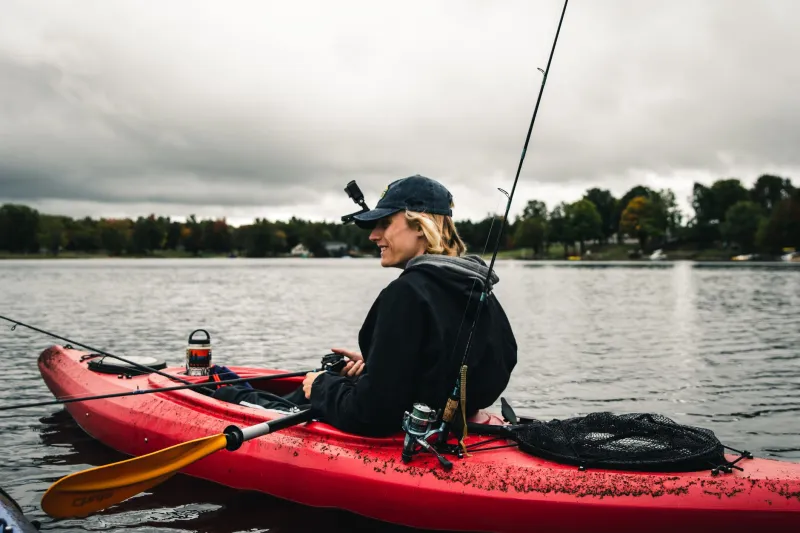
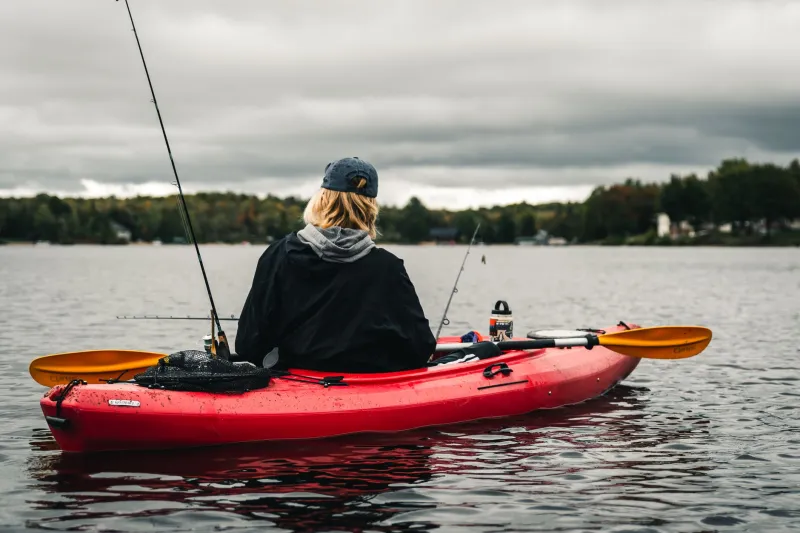
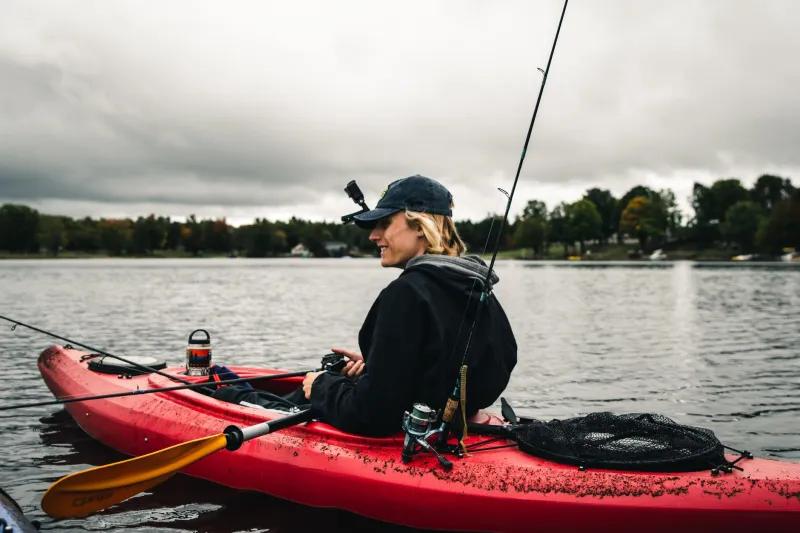
Solo kayak bass fishing is one of the most genuinely freeing experiences you can have outdoors in the US. No negotiation. No waiting. No compromises on where to launch, when to leave, or which cove to hit first. You read the water, you make the call, and you live with the results. That feedback loop — unfiltered by anyone else's input — is genuinely one of the fastest ways to grow as an angler.
When you're alone, you also fish differently. You slow down. You work water more thoroughly because there's no buddy already halfway across the flat you wanted to hit. You pick apart a single piece of structure for 20 minutes instead of moving on because nobody's pressuring you to run a pattern.
Solo fishing also forces you to manage everything yourself — anchoring, boat control, landing fish, rigging — which builds a level of self-sufficiency that group fishing never quite demands. The angler who's spent 50 days alone on the water handles unexpected situations differently than someone who's always had a partner to lean on.
And let's be honest: some water is just better alone. Pressured public lakes where kayaks stack up on the good points during tournament season? Going solo means you're quieter, more maneuverable, and a lot less likely to blow up a spot by rolling in two-deep.
The Honest Risks of Solo Paddling
Here's where the solo lifestyle deserves some real talk. Kayak fishing alone carries risks that are easy to minimize until something goes wrong.
Capsizing happens. Getting pinned against a strainer in moving water happens. Medical emergencies happen. When you're alone, you are your own emergency response team — and your kayak doesn't come with a co-pilot. A solid personal flotation device (PFD) worn at all times, a charged phone in a waterproof case, and a float plan left with someone on shore aren't optional extras for solo anglers. They're the baseline.
The US Coast Guard consistently reports that the majority of kayak fatalities involve paddlers who weren't wearing their PFDs. Solo or not, that stat matters. But alone, the margin for error shrinks considerably.
If you're going to fish solo — and you absolutely should — do it smart. File a float plan. Carry a whistle and a signaling device. Know the water you're on. Don't let the freedom of solo fishing become an excuse to skip the safety fundamentals.
The Case for Fishing With a Partner
Having a buddy on the water changes the entire dynamic, and not just from a safety standpoint. Two kayaks covering water efficiently is a legitimate fishing advantage, especially when you're trying to crack a pattern on unfamiliar water.
You can split up and run different banks, different depths, different lure categories. One angler works a crankbait down the main channel edge while the other flips soft plastics into the pockets. When one approach produces, you both pivot. That's a kind of parallel processing that solo fishing simply can't replicate.
Fishing with a partner who's better than you is also one of the most effective ways to level up fast. Watching someone else's presentation, timing, and boat positioning from 30 feet away teaches you things that YouTube tutorials can't. You see the angle they use to skip a bait under a dock. You notice how early they start their retrieve. You pick up habits you didn't even know you were missing.
On bigger water — reservoirs, large river systems, coastal estuaries — having a partner also just makes sense from a coverage standpoint. Some of those systems are too big to crack efficiently alone, and a second set of eyes on the water can spot a school busting bait that you'd have paddled right past.
The Hidden Friction of Partner Fishing
Anyone who tells you partner kayak fishing is all upside hasn't done enough of it. The friction is real, and it shows up in specific ways.
Schedule conflicts are the most obvious. The window for great bass fishing — pre-spawn, early summer mornings, fall turnover — doesn't wait for your buddy's work schedule to clear up. Solo fishing means you launch when conditions are right, not when both calendars align.
Fishing style compatibility matters more than most people admit. If you're a slow, methodical angler who likes to pick apart structure and your partner is a run-and-gun spot-hopper, you'll spend half the day frustrated at each other's pace. This isn't a small thing. A mismatched fishing partnership can genuinely ruin a day that should have been great.
Then there's the crowd dynamic. Two kayaks at a boat ramp draw more attention than one. Two kayaks working a cove are louder, take up more space, and spook fish more easily in shallow, pressured water. On small impoundments or tight creek systems, a solo kayak is almost always the right tool.
When to Choose Each Approach
Here's the honest guide:
Go solo when:
- You're fishing small, pressured water where stealth and maneuverability matter
- You want unfiltered feedback on your own decisions
- Conditions are favorable and you've fished the water before
- You need the mental reset that only comes from being completely alone outdoors
Fish with a partner when:
- You're on big, unfamiliar water and need to cover ground efficiently
- You're learning and want real-time feedback from someone better
- Conditions are rough or the water is remote and safety is a genuine concern
- You're trying to crack a pattern fast and two rods are better than one
The best kayak bass anglers do both, and they're deliberate about which they choose. Neither is a default. Both are tools.
The Skill Each Approach Builds
Solo fishing builds decision-making, self-reliance, and patience. Partner fishing builds pattern recognition, communication, and adaptability. If you only ever fish one way, you're leaving half your development on the table.
The most well-rounded kayak anglers you'll meet on the water have logged serious time both alone and with a crew. They know what each feels like, what each demands, and when each gives them an edge. That's the real answer to the solo vs. partner debate: it's not a competition. It's a toolkit. Use both.