Paddle Hard, Break Down Slow: The Fitness Trap Kayak Bass Anglers Walk Right Into
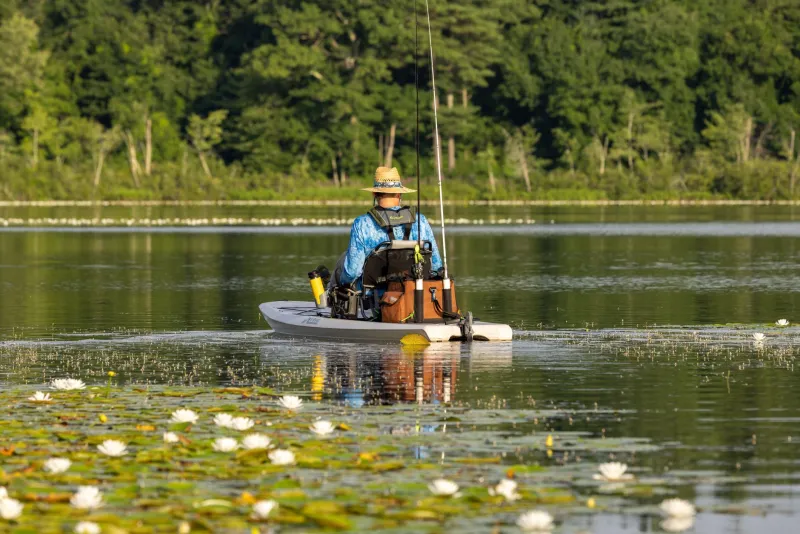
There's a weird irony baked into the kayak fishing lifestyle. The more time you spend on the water — grinding through long paddles, dialing in your cast, perfecting your retrieve — the more you're quietly setting yourself up for a breakdown. Not a mental one. A physical one.
It happens to almost every serious kayak bass angler eventually. A shoulder starts clicking somewhere around mile three. A lower back tightens up mid-morning and never fully releases. An elbow gets cranky right when the topwater bite turns on. You chalk it up to getting older or sleeping wrong, but the truth is more specific than that: you've built a body that's really good at one very narrow set of movements, and everything else has started to wither.
That's the fitness paradox. You're getting better at fishing. You're getting worse at being a functional human being who can fish hard for years without falling apart.
Why Kayak Fishing Creates Imbalances in the First Place
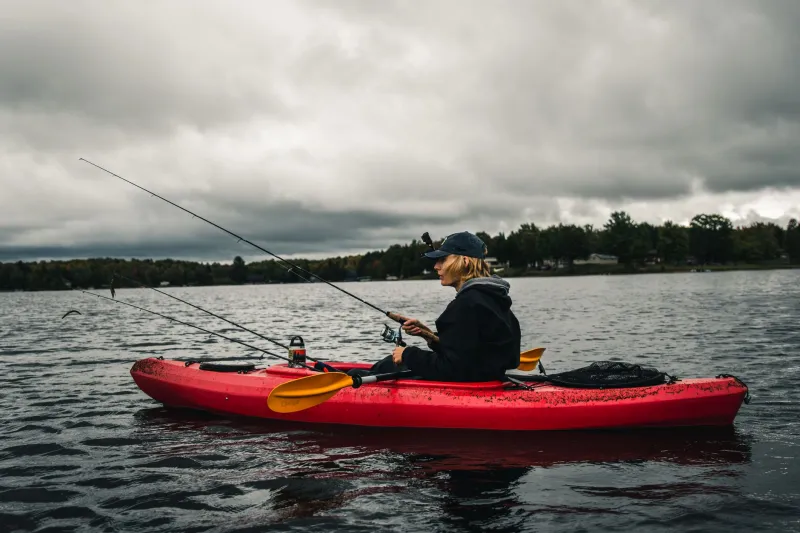
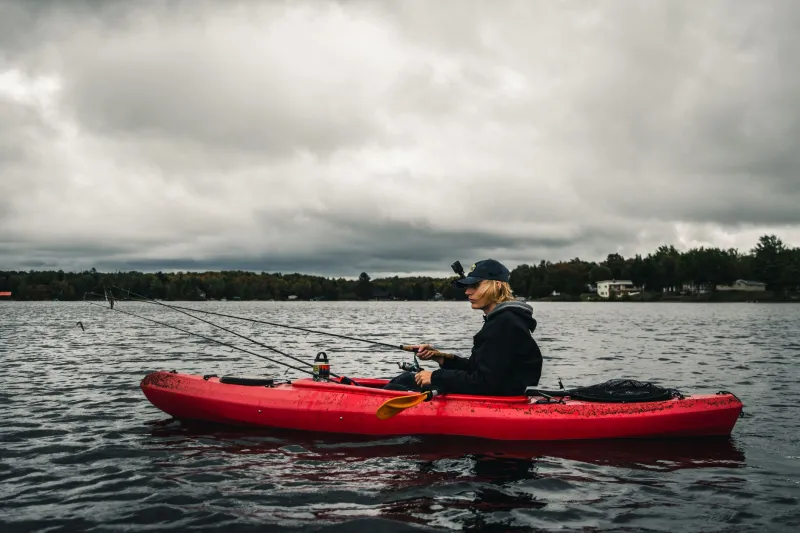
Think about what you actually do during a five-hour kayak session. You paddle — almost always favoring one side on windy days or when you're tracking a shoreline. You cast — almost always with your dominant arm, rotating your torso in one direction hundreds of times. You brace against current or wind with your core locked in a hunched, seated position for hours at a stretch.
None of that is inherently dangerous. But done repeatedly, with zero counterprogramming, it creates predictable problems:
- Shoulder imbalances: The anterior (front) deltoid and internal rotators get hammered from both paddling and casting. The posterior shoulder and rotator cuff muscles — the ones that stabilize and protect the joint — get almost nothing.
- Thoracic stiffness: Sitting in a kayak cockpit locks your mid-back into a rounded position. Over time, your thoracic spine loses its ability to rotate freely, which forces your lower back and shoulders to compensate.
- Hip flexor tightness: Hours of seated fishing means your hip flexors are in a shortened position constantly. Tight hip flexors tilt your pelvis forward, compress your lumbar spine, and make that lower back pain feel like it came out of nowhere.
- Core weakness in extension: Kayak fishing builds decent anti-rotation core strength, but almost zero spinal extension strength. That imbalance shows up as fatigue and pain on long paddles.
The guys who fish 80 to 100 days a year are the most at risk, but even weekend warriors can start feeling this after a single hard season.
The Movements You Need to Add (Not Just the Ones You Love)
The fix isn't complicated, but it does require consistency. You don't need a gym membership or a personal trainer. You need about 20 minutes, three or four times a week, focused on the patterns your fishing life doesn't give you.
Pull Before You Paddle
For every pushing movement in your fishing life (casting, forward paddling stroke), you need a pulling movement to balance it out. Rows are your best friend here. Resistance band rows, dumbbell rows, cable rows — doesn't matter much. What matters is that you're pulling your elbows behind your torso and squeezing your shoulder blades together. This directly counters the forward-rounded posture that builds up on the water.
Aim for two to three sets of 12 to 15 reps, two or three times a week. It takes ten minutes and will add years to your fishing career.
Open Up the Thoracic Spine
This one sounds boring. It isn't. Grab a foam roller, place it perpendicular to your spine at mid-back, and gently extend over it for 30 to 60 seconds. Move it up a few inches. Repeat. Do this before and after long sessions.
If you don't have a foam roller, a half-kneeling thoracic rotation stretch works too — kneel on one knee, place your hand behind your head, and rotate your elbow toward the ceiling. Ten reps each side, and your upper back will thank you before the morning session is over.
Train Your Non-Dominant Side
This one's simple and almost nobody does it. Practice casting with your off hand. Paddle a few hundred yards leading with your non-dominant side. It feels awkward at first, but it forces your body to develop bilateral balance instead of building an increasingly lopsided frame.
Some of the best kayak tournament anglers do this deliberately during practice days when the pressure is off. It pays dividends in endurance during the back half of long days.
Hip Flexor Work Is Non-Negotiable
A 90-second kneeling hip flexor stretch on each side, done daily, will do more for your lower back comfort on the water than any lumbar support cushion ever will. Add in a set of glute bridges — 15 to 20 reps — to wake up the posterior chain that sitting all day shuts down.
This isn't glamorous. But neither is sitting on the bank watching your buddies catch fish because your back seized up at 9 a.m.
Building a Year-Round Routine That Fits the Fishing Calendar
Off-season is your best opportunity to address imbalances before they become injuries. From November through February in most of the US, your time on the water drops. That's when you put in the structural work — more pulling, more mobility, more posterior chain strength.
As the season ramps up in spring, shift to maintenance mode. Ten to fifteen minutes of targeted mobility before long sessions, a few sets of rows and glute work two or three times a week. Nothing heroic. Just enough to keep the wheels on.
Summer — especially during those brutal dog-day stretches when you're grinding through heat for hours — is when the imbalances hit hardest. Fatigue amplifies poor mechanics. If you've done the prep work, you'll notice the difference. If you haven't, you'll feel it in your shoulder on the drive home.
The Long Game
The anglers who are still ripping bass out of kayaks at 60 and 70 years old aren't just lucky. They've figured out — usually after one injury too many — that fishing performance is physical performance. You can have the best rod, the best paddle, and the most dialed-in lure selection on the lake, but if your shoulder gives out at hour four, none of it matters.
Paddling out and casting deep is the whole point. But you can only keep doing it if you take care of the machine that makes it possible. Put in the off-water work, and the on-water rewards will follow.