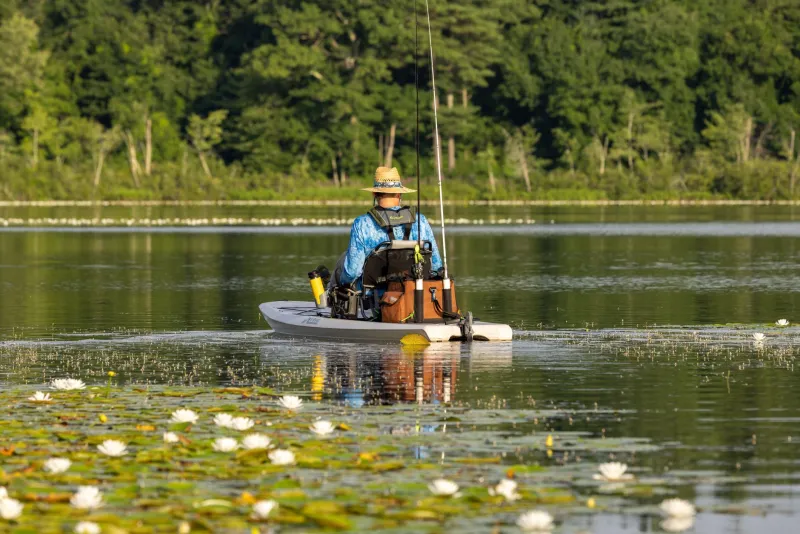
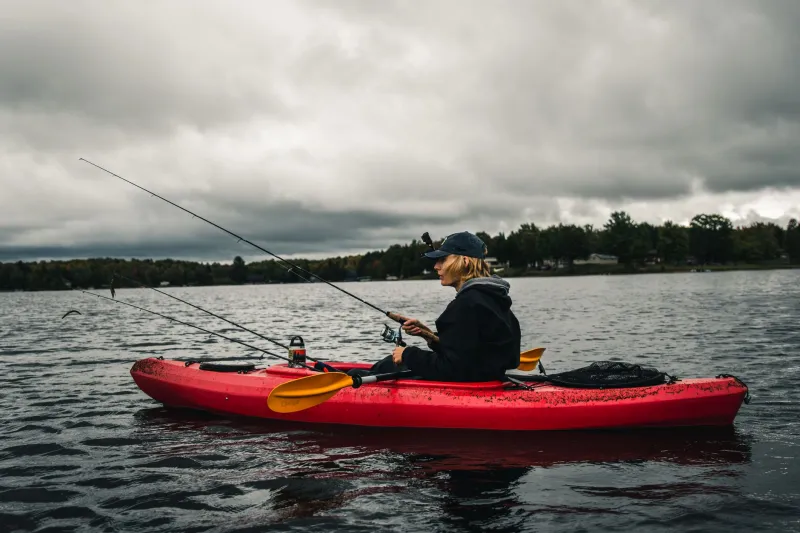
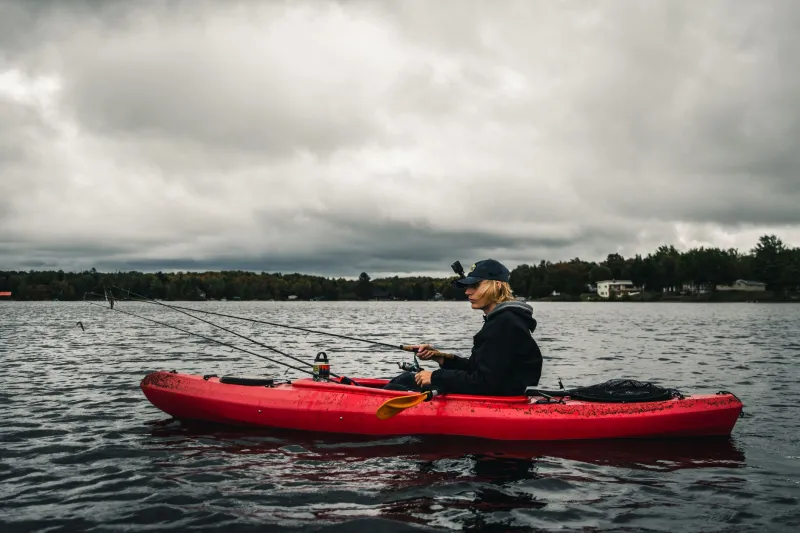
Beyond Sunrise: The Science of Bass Feeding Windows and How to Work Them From a Kayak
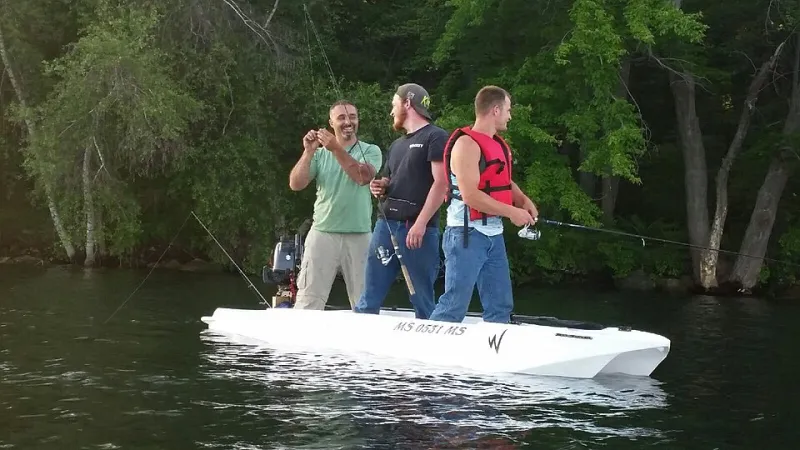
Photo: Qartaj, CC BY-SA 4.0, via Wikimedia Commons
Every kayak bass angler knows the dawn drill. Alarm at 4:30. On the water by first light. Paddle hard, fish fast, head home before the heat sets in. It's a solid strategy — but if it's the only strategy in your playbook, you're leaving a lot of fish in the water.
Bass don't eat on a schedule that revolves around your alarm clock. They eat when their metabolism, their environment, and their prey align. Understanding that alignment — and knowing how to position yourself on a kayak to take advantage of it — opens up fishing opportunities that most anglers never even look for.
The Metabolic Engine Behind the Bite
Largemouth bass are ectothermic, meaning their body temperature and metabolic rate are directly controlled by the water around them. When water temperature rises, their metabolism accelerates. They need more calories. They feed more aggressively. When temperatures drop, metabolism slows, and so does the bite.
But here's what most anglers miss: the rate of change matters as much as the temperature itself. A slow warming trend from 58°F to 65°F over several days triggers sustained feeding. A sudden cold snap that drops water temp by eight degrees in twenty-four hours shuts fish down almost completely, regardless of what time it is.
For kayak anglers, this translates directly into trip planning. Checking a five-day water temperature trend on USGS stream gauges or apps like Fishbrain and Navionics gives you a predictive edge before you ever load the yak.
The Barometric Factor: Pressure Windows Nobody Talks About
Barometric pressure is one of the most consistently underused pieces of data in recreational bass fishing. The research on this is genuinely interesting. During periods of stable or slowly rising pressure, bass tend to suspend at consistent depths and feed predictably. During rapidly falling pressure — the kind that precedes a front — bass often go on aggressive, almost frantic feeding binges.
That pre-front window is one of the best mid-day bite opportunities available to kayak anglers. It doesn't care about sunrise. A falling barometer at noon on a Wednesday in October means fish are actively feeding, and if you're on the water, you'll catch them.
Conversely, the post-front period — stable, high pressure, bluebird skies — is when most anglers complain about the fishing being dead. And they're right, mostly. But even then, there's typically a secondary feeding window in the late afternoon as temperatures begin to equalize and pressure stabilizes.
Photoperiod and the Seasonal Clock
Bass don't just respond to daily conditions. They're also running an internal calendar tied to daylight hours — what biologists call photoperiod. As days shorten in fall, bass feed aggressively to build fat reserves ahead of winter. As days lengthen in late winter and early spring, the pre-spawn feeding response kicks in before water temperatures even hit the classic trigger point of 55°F.
For kayak anglers, this means the calendar matters even when conditions look wrong. A cold, gray day in late February might seem like a waste of time. But if photoperiod is pushing pre-spawn behavior, fish will be positioning in staging areas and eating — just more slowly and selectively than they will in April.
Slowing down your presentation to match that selective feeding mood is something kayak anglers do naturally. You're not burning through water at tournament pace. You can work a spot patiently, make fifteen casts to the same laydown, and eventually find the right angle.
The Mid-Day Bite: Where Kayak Anglers Quietly Win
Here's the window most boat anglers abandon: 10 a.m. to 2 p.m., especially in summer. Conventional wisdom says go home. The serious kayak angler says go deep — or go shaded.
During mid-summer, largemouths often push to the deepest accessible structure during the hottest part of the day, especially in clear-water impoundments. A kayak with a depth finder can quietly position over a submerged point, a channel ledge, or a deep dock and work a drop shot or shaky head vertically with zero boat pressure. That's a legitimate mid-day bite that most anglers skip entirely.
In shallower, murkier water — bayous, river backwaters, natural lakes — bass stay shallow but move into shaded cover. Docks, overhanging trees, grass mats. A kayak can slide under a dock overhang and flip a Senko into the back corner without disturbing a thing. Boat anglers can't do that. They're making long casts from outside, hoping something comes out to eat.
The Evening Window: Underrated and Under-Fished
Everyone talks about the morning bite. Almost nobody talks about the evening bite with the same reverence — but they should. The last ninety minutes before dark, particularly in late spring through early fall, produces some of the most consistent topwater and shallow-cover action of the entire day.
Water temperatures are peaking and starting to drop. Shad and other baitfish move shallow as light fades. Bass follow. If you've spent the mid-day hours resting or covering water, you can position your kayak on a flat, a grass edge, or a creek mouth and be perfectly set up for an evening feeding window that rivals any dawn patrol.
The practical advantage of being in a kayak here is access. Evening crowds at popular boat ramps are lighter than morning crowds. Boat traffic has thinned. You can paddle into spots that were inaccessible earlier when other boats were running nearby.
Building Your Own Feeding Window Calendar
The most effective kayak anglers aren't just reacting to conditions. They're building a mental model of their home water — logging what conditions triggered bites on past trips, noting water temps, pressure trends, and time of day. It sounds like homework, and it is. But after a season of deliberate note-taking, patterns emerge that are specific to your lake or river system.
A few things worth tracking:
- Water temperature at the time of the first bite and the last bite
- Barometric pressure trend over the preceding 24 hours
- Cloud cover and wind direction
- Moon phase (debated, but worth logging to see if it correlates on your water)
- Time of day relative to sunrise and sunset
Over time, that data tells you something no fishing app can: what your water does, with your fish, under your conditions.
The dawn patrol isn't wrong. It's just incomplete. Bass feed in windows throughout the day, driven by biology that doesn't care about fishing culture or convention. The anglers who understand that — and who have a kayak that lets them stay on the water long enough to catch multiple windows — are the ones consistently putting fish in the net when everyone else has already gone home.