Muddy Water, Big Bass: The Science of Soft Plastic Colors in Stained Southern Lakes
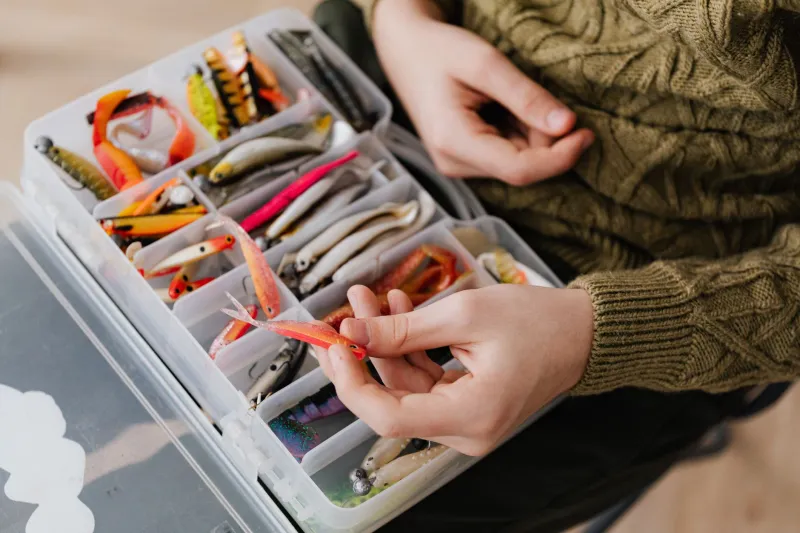
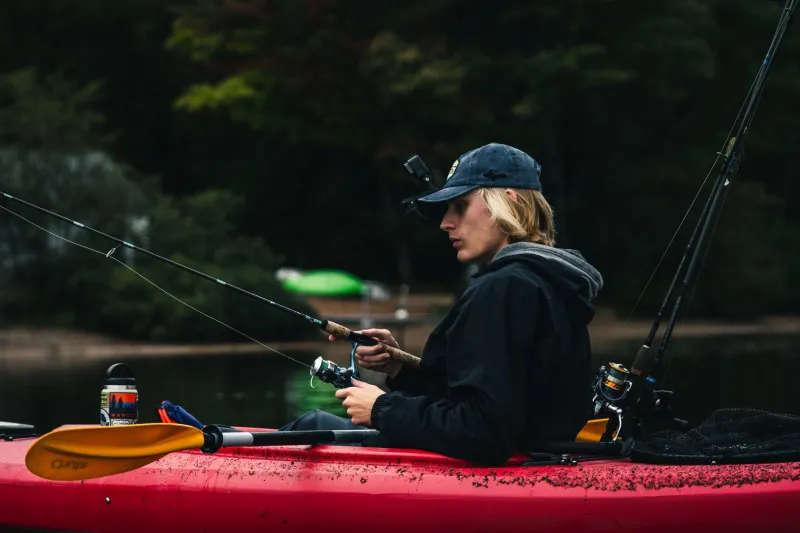
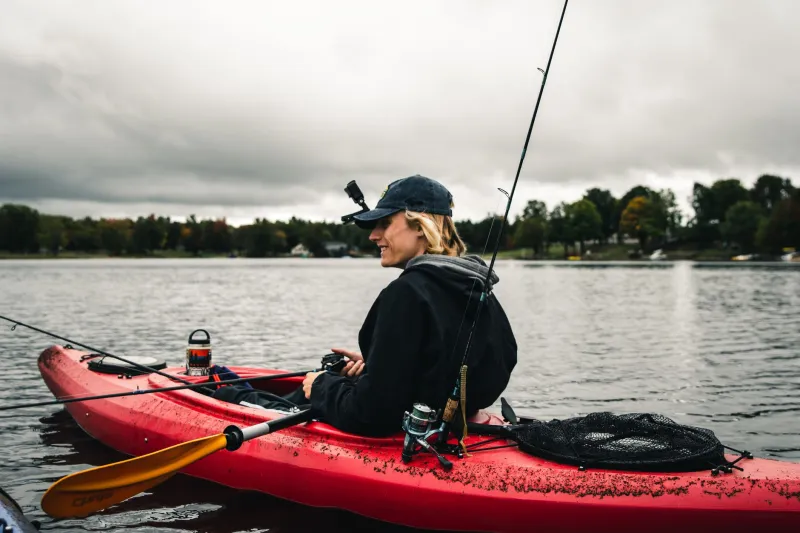
Paddle into any Southern reservoir after a good rain and you're looking at water that resembles sweet tea on a good day and chocolate milk on a bad one. Stained and murky conditions are just part of life if you fish the bayous of Louisiana, the flatwater impoundments of Georgia, or the tannin-soaked backwaters of East Texas. And if you've ever stood there at the launch staring into your tackle bag wondering which soft plastic to tie on, you're not alone.
Here's the thing though — that decision doesn't have to be a guess. Bass biology actually gives us a pretty solid roadmap for which colors work in low-clarity water and why. Once you understand how a largemouth sees in stained conditions, your color choices stop being random and start being deliberate.
How Bass Eyes Actually Work in Murky Water
Largemouth bass have two types of photoreceptors in their eyes — rods and cones. Rods handle low-light sensitivity, and cones are responsible for color detection. Bass have cones that are most sensitive to two parts of the color spectrum: red-orange wavelengths and green-blue wavelengths. They're also sensitive to ultraviolet light, which is something most anglers never think about.
Now here's where water clarity changes everything. In clear water, light penetrates deeply and bass can rely on visual contrast and subtle color differentiation to identify prey. In murky or stained water, light gets scattered and absorbed quickly. Red wavelengths are the first to disappear as depth increases. Green follows. What remains visible longest — especially in dark, tannic, or sediment-heavy water — are shorter wavelengths like blue and violet, along with high-contrast combinations that create strong silhouettes.
The practical takeaway? In muddy Southern water, you're not trying to match a hatch perfectly. You're trying to create the most detectable visual signal possible for a fish whose visibility might be measured in inches, not feet.
Black and Blue: The Old Reliable
There's a reason every serious kayak angler in the South has a bag of black and blue soft plastics within arm's reach. This color combination creates an extremely dark, high-contrast silhouette that bass can pick up even in near-zero visibility conditions. Against the murky water background, a black and blue creature bait or stick worm reads as a distinct, defined shape rather than blending into the soup.
Black and blue shines brightest in the dirtiest water you'll encounter — post-rain runoff conditions, flooded creek arms, and those backwater pockets where the visibility is basically nonexistent. It also tends to be a top producer in low-light windows like early morning and late afternoon, when the combination of murky water and fading light makes contrast even more critical. Rig it Texas-style on a heavy tungsten weight and flip it tight to laydowns and dock pilings.
Chartreuse: Loud, Proud, and Effective
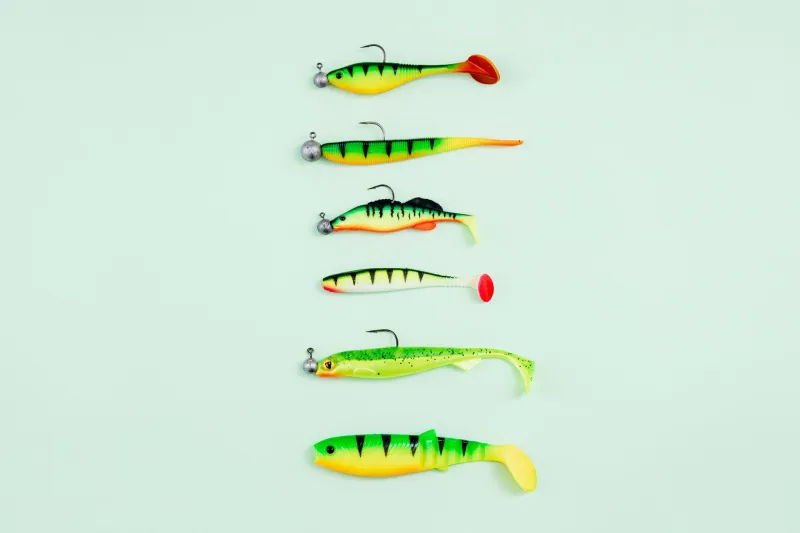
Chartreuse is basically the neon sign of the soft plastic world, and in stained water it earns every bit of its reputation. The reason it works so well comes back to contrast and visibility. That bright yellow-green color sits right at the edge of what bass cone receptors are most tuned to, and in low-clarity water it creates a highly visible target that stands out against dark backgrounds.
Chartreuse really earns its keep in water that's stained but not completely blown out — think slightly off-color lake conditions after moderate rain or in areas with moderate algae presence. Swimbaits, curly tail grubs, and paddle tails in chartreuse or chartreuse-tipped combinations are particularly effective because the movement amplifies the visual signal. If you're fishing a bayou system where the water has that greenish-brown tint, a chartreuse swimbait on a light jighead can be absolutely lethal on schooling bass.
Junebug: The Underrated Weapon
Junebug doesn't get the press it deserves outside of tournament circles, but ask any seasoned angler who regularly fishes Southern impoundments and they'll tell you it belongs in the same conversation as black and blue. The dark purple-red base with flake creates a profile that reads almost black in low light while still offering just enough color variation to trigger reaction strikes in transitional visibility conditions.
What makes junebug especially interesting is its performance in water with a reddish-brown tannin stain — common in the swampy systems of the Carolinas, Alabama, and Mississippi. In that specific water color, junebug blends into the surrounding environment just enough to look natural while still being visible to bass. It's a finesse move in dirty water, and it works particularly well on finesse jigs, Senkos, and beaver-style baits fished slowly around wood cover.
Watermelon Red: The Transition Color
When water clarity is somewhere in between — not crystal clear but not completely blown out either — watermelon red becomes a serious contender. The green base mimics the natural coloring of baitfish and crawfish common in Southern waters, while the red flake adds a flash element that triggers the bass's sensitivity to red-orange wavelengths.
This color tends to shine in the 12-18 inch visibility range that you'll often encounter in mid-lake areas of larger Southern reservoirs. It's also a strong pick during the post-frontal period when water has started to clear up but hasn't fully recovered. Ned rigs, drop shots, and finesse worms in watermelon red are a go-to in these transitional conditions.
White and Pearl: When the Bite Is About Flash
In stained water with active, feeding bass — especially during low-light periods — white and pearl soft plastics can outfish everything else in the bag. The high reflectivity of light-colored baits creates maximum flash in limited light, which triggers the reaction-strike instinct in aggressive fish. Think white paddle tail swimbaits burned just under the surface at dawn, or pearl-colored flukes twitched through shallow grass flats.
This works best when bass are actively chasing baitfish rather than sitting tight to structure, so read the water before you commit.
Your Quick-Reference Color Guide for Murky Southern Water
Before you launch your yak into stained water, run through this simple framework:
- Visibility under 6 inches / post-rain blown-out conditions → Black and Blue, heavy tungsten, slow and tight to cover
- Visibility 6–18 inches / typical stained Southern reservoir → Junebug or Chartreuse, match to structure type
- Visibility 12–24 inches / slightly off-color with tannin stain → Watermelon Red or Junebug, finesse presentations
- Low-light windows in any murky water → White/Pearl for active fish, Black/Blue for tight-to-cover fish
- Greenish-stained bayou or backwater → Chartreuse swimbaits and paddle tails on the move
The bottom line is this: murky Southern water doesn't have to be a guessing game. Bass are still eating — they're just relying on different visual cues to find your bait. Match your color choice to what their biology can actually detect in those conditions and you'll start turning more follows into hooksets. Paddle smart, rig smarter.