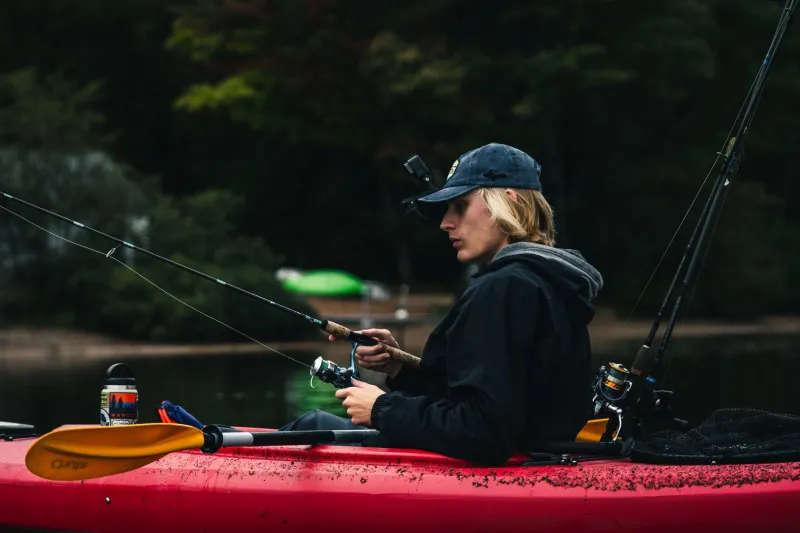
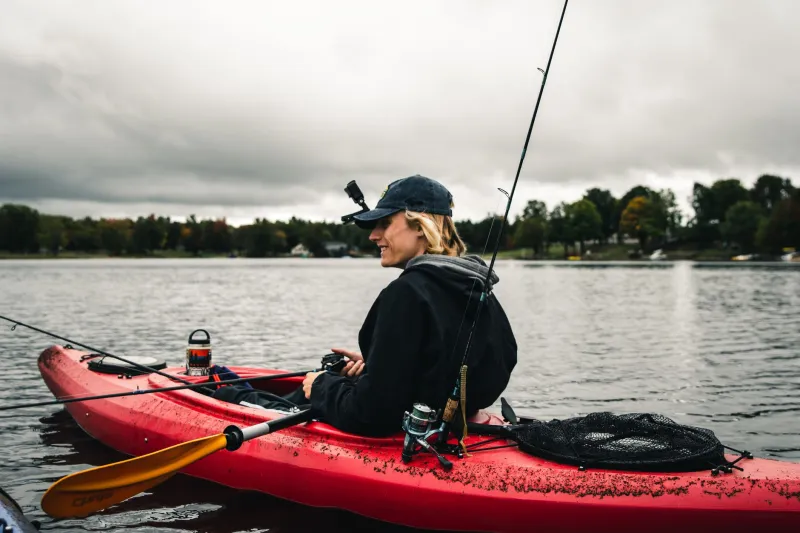
Ditch the Chatterbait: Why the Ned Rig Is the Deadliest Weapon a Kayak Angler Owns
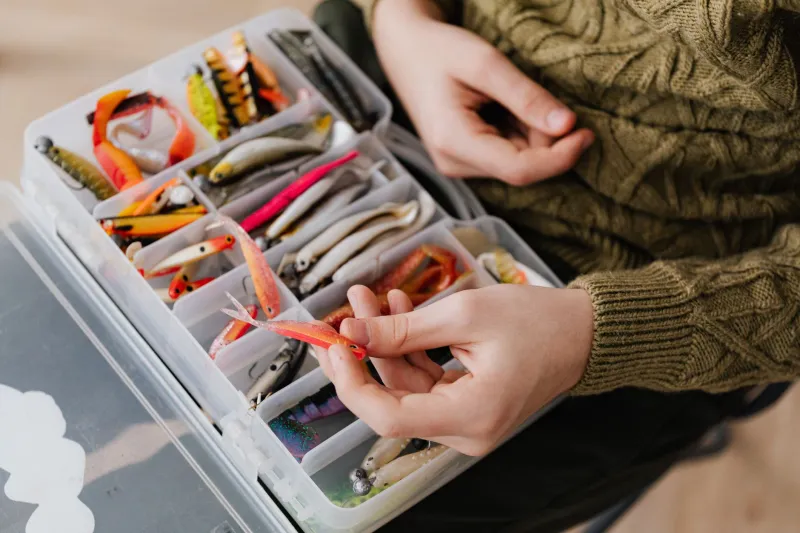
Let's be honest. When most kayak anglers rig up for a morning session, they reach for something flashy. A big swimbait. A chatterbait. Maybe a topwater frog if the grass is thick enough. There's nothing wrong with any of those choices — but there's a strong argument that while everyone else is chucking hardware, the angler quietly tying on a Ned rig is the one who's actually going to load the cooler.
The Ned rig isn't new. It isn't exotic. It's a stubby little chunk of ElaZtech foam plastic on a light mushroom head jig, and it looks almost embarrassingly simple sitting next to the rest of your tackle. But here's the thing: simplicity is exactly why it works so well from a kayak. And most anglers are sleeping on it.
Why the Kayak Changes Everything
Fishing a Ned rig from a bass boat is fine. Fishing it from a kayak is something else entirely.
The kayak's low-profile, near-silent approach lets you get inside casting distance of structure that a boat would spook before you even dropped the trolling motor. We're talking laydowns that barely clear the waterline, submerged dock pilings in eighteen inches of water, chunk rock transitions along steep banks — the kind of spots where pressured bass go to hide and where a power boat simply cannot follow.
A Ned rig thrives in exactly those environments. It's a finesse bait at its core, designed to be worked slowly, subtly, with minimal angler input. The buoyant tail stands straight up when the jig head hits bottom, creating a vertical presentation that bass find almost impossible to ignore. The slower you fish it, the better it works — and patience is a lot easier to maintain when you're drifting quietly in a kayak rather than managing boat traffic and engine noise.
Your hull sits lower in the water. Your cast angles are different. You can hold position in a foot of water over a flat without making a sound. All of that plays directly into the Ned rig's strengths.
The Setup You Actually Need
Don't overthink this. A 6'8" to 7' medium-light spinning rod with a fast action, spooled with 8-10 lb fluorocarbon or a light braid-to-fluoro leader, is the bread-and-butter setup. Go with a 1/15 to 1/6 oz mushroom head depending on depth and wind — lighter in calm, shallow water, slightly heavier when you need to feel the bottom in four to six feet.
For the plastic, the original Z-Man TRD (Tiny Ranger Diver) is still the gold standard. The ElaZtech material floats off the bottom on its own, which is the whole point of the rig. Cheap soft plastics won't do the same thing. This is one spot where brand actually matters.
Colors? Keep it simple. Green pumpkin, black and blue, and a natural shad pattern will cover 90% of your situations. When the water's clear and the sun's high, go natural. When it's stained or you're fishing shade, go darker.
How to Fish It from the Yak
The retrieve is almost laughably easy, which is part of why anglers dismiss it. Cast it out, let it sink on a semi-slack line, and then just barely move it. A small hop. A subtle drag across the bottom. A slow lift and fall. The bait does the work — you're mostly just keeping in contact with it.
From a kayak, you've got a positioning advantage here. Instead of casting parallel to a bank and dragging the bait back toward you, try casting directly into the cover and letting the bait sit. Twitch it in place. Let it stand up. Wait. That standing-tail presentation in the middle of a brush pile or against a dock piling is something bass that have seen a thousand crankbaits and jigs haven't seen nearly as often.
Drift fishing a Ned rig along a grass edge or a rock transition is also incredibly effective from a kayak. Use a light breeze to move you slowly down the bank, dragging the rig just ahead of you. You'll cover water efficiently while keeping the bait in the strike zone longer than you would with a faster moving lure.
Seasonal Applications That Prove the Point
Spring pre-spawn: Bass are staging on secondary points and transitions, often in six to twelve feet of water. A Ned rig worked slowly along those drops catches fish that won't commit to anything with more action. The kayak lets you hover right over those transition zones without anchoring and blowing up the spot.
Summer midday: When the bite dies and everyone else is back at the ramp, fish the deep shade. Dock pilings, bridge shadows, overhanging trees. A Ned rig fished vertically in those tight spots — basically drop-shotting it without the drop shot — is one of the most consistent summer techniques there is. You can only access a lot of those spots in a kayak.
Fall: Bass are scattered on flats chasing shad. A light Ned rig on a slow drag mimics a dying baitfish dragging across the bottom. It's not glamorous. It produces.
Winter: If you're still paddling when the water temperature drops below 50 degrees — and some of us are — a Ned rig is one of the only lures that still reliably triggers cold, lethargic bass. Slow down your presentation even more. Fish it like you've got nowhere to be.
Why Nobody Wants to Admit It Works
Here's the honest part of this conversation. The Ned rig doesn't look impressive. It doesn't make a big splash on social media. There's no satisfying thump of a big crankbait getting crushed on a hard-charging retrieve. It's a little foam stub on a tiny jig head, and it catches fish in ways that feel almost like cheating.
That's exactly why most kayak anglers leave it in the bottom of their tackle bag instead of tying it on first.
But the anglers who are consistently putting bass in the net — especially on pressured public water where the fish have seen every popular bait a hundred times — they've figured it out. The Ned rig rewards patience, precision, and stealth. Those happen to be the exact qualities the kayak platform already gives you.
You've got the right tool. You've got the right access. Now tie on the right lure.
Paddle out quiet. Cast it deep. Let it stand up and do its thing. The bass will find it.