8 Mods That Completely Changed How I Fish Bass From a Kayak
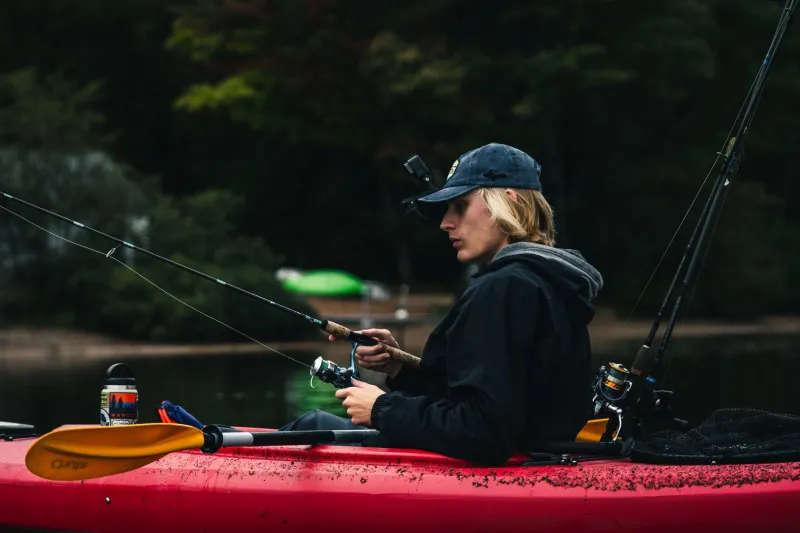
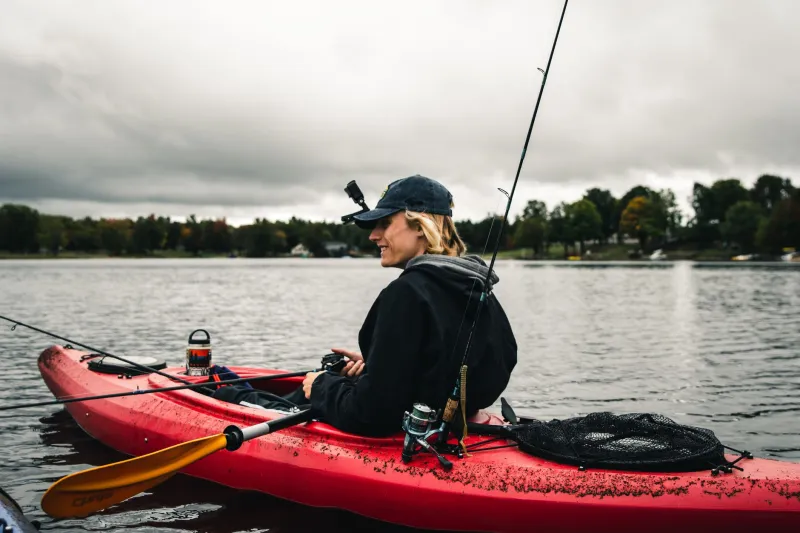
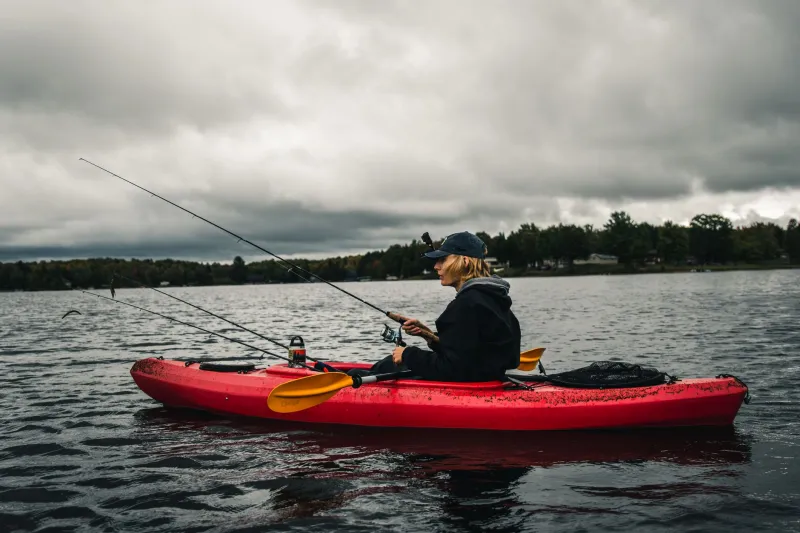
I fished out of a stock kayak for two seasons. No frills, no extras — just me, a paddle, and a tackle bag bungeed to the back deck with a prayer. It worked, sort of. But I was constantly fighting my own rig instead of focusing on the fish.
Then I started modifying. One upgrade led to another, and somewhere between a PVC rod holder and a homemade milk crate system, my whole approach to kayak bass fishing shifted. The boat didn't change. I just made it work for me.
Here's what actually moved the needle.
1. A Milk Crate System With Rod Tubes
This is the gateway mod. Everybody starts here, and for good reason — it's cheap, endlessly customizable, and solves about four problems at once.
A standard milk crate (the real ones are hard to find, but cheap plastic storage crates work fine) sits perfectly in most kayak tank wells. Add some PVC pipe cut to length, zip-tied or hose-clamped into the corners, and you've got vertical rod holders that keep your sticks organized, protected, and within arm's reach.
For bass fishing specifically, this matters because you're constantly switching presentations. One rod rigged with a topwater, one with a Texas-rigged creature bait, one with a swimbait. Without a crate system, those rods are rolling around the deck or balanced across your lap while you paddle. With one, you grab exactly what you need without breaking your drift.
Total cost: under $30 if you scavenge a crate and hit the hardware store.
2. A Proper Transducer Arm Mount
Running a fish finder on a kayak sounds straightforward until you realize the transducer has nowhere useful to go. Stick it to the hull wrong and you get cavitation bubbles that kill your sonar reading. Stick it to the side and it bangs every dock you paddle past.
A dedicated transducer arm — either a scupper-mounted or rail-mounted version — positions the transducer correctly below the hull where it reads clean water. Brands like YakAttack and Wilderness Systems make solid options, but there are DIY builds using RAM mounts and aluminum flat stock that work just as well for half the price.
Why it matters for bass: structure is everything. Knowing there's a submerged point, a depth change, or a brush pile thirty feet ahead changes where you cast before you even get there. A transducer mounted wrong gives you garbage data. Mounted right, it's like having a cheat code.
3. Flush-Mount Rod Holders at the Sides
Vertical rod holders in the crate are great for transport. But when you're actively fishing, you want rods horizontal and accessible at your hips — not behind your shoulders.
Flush-mount rod holders installed on the side gunwales keep a rod or two at the ready without cluttering the deck. When a bass blows up on a topwater and you need to immediately reach for a follow-up bait, that rod is right there.
Installation takes a drill, a hole saw, and about forty-five minutes. Seal the edges with marine-grade silicone and you're done. Cost: $15–$25 per holder.
4. A Drift Chute (Drift Sock)
Wind is the kayak angler's most annoying enemy. You set up on a grass flat, get your cast dialed in, and thirty seconds later you've drifted twenty yards off target.
A drift chute — basically a small fabric parachute you deploy off the bow or stern — creates drag that slows your drift dramatically. It won't stop you completely, but it buys you time to work a cast properly before repositioning.
For bass fishing, this is especially useful when you're running parallel to a bank or working a specific depth contour. Without it, you're paddling every thirty seconds. With it, you're fishing.
Good drift chutes run $20–$40 and clip onto any cleat or D-ring. Keep one in the crate and you'll reach for it more than you expect.
5. A Gear Track System
This one changed everything about how my deck is organized. Gear tracks — the low-profile rails made by companies like YakAttack or Scotty — bolt onto your kayak and accept modular accessories: rod holders, camera mounts, phone holders, fish finders, cup holders, you name it.
The beauty is reconfigurability. Before a tournament, I can shift everything around in ten minutes to match my plan for the day. Fishing timber? Move the rod holders closer. Running open water? Slide the fish finder display to a better angle.
This isn't a cheap mod — a full track setup with accessories can run $100–$300 depending on how deep you go — but it's the backbone that makes every other modification cleaner and more intentional.
6. A Anchor Trolley System
I know, I know — we've talked anchoring before. But an anchor trolley is a different beast than just dropping a weight. This is a rope-and-pulley system that runs the full length of your kayak and lets you reposition where the anchor rope exits the boat without moving your body.
Why that matters: wind and current will push your bow or stern in whatever direction they want. An anchor trolley lets you fine-tune your position so you're facing your target — a dock, a laydown, a point — instead of broadside to it or pointed the wrong way.
For bass fishing, precise positioning is half the battle. This mod gives you control over it without wrestling your whole rig around. Cost: $30–$50 for a pre-made kit, or about $15 in hardware store parts if you DIY it.
7. Foam Padding on the Seat and Footrests
This one sounds boring. It is not boring.
Long days on the water — six, eight, ten hours — will destroy your back and your focus if your seat situation is bad. A kayak seat that came stock with a $400 boat is not designed for all-day fishing. It's designed to be light and cheap.
Adding closed-cell foam padding to the seat base, or upgrading to an aftermarket seat like the Surf to Summit or a GTS Sport, changes your endurance completely. Same goes for foam padding on footrests — your legs shouldn't be fighting for a comfortable position all day.
You fish better when you're not miserable. That's not a hot take, that's just true.
8. A Waterproof Power System for Electronics
If you're running a fish finder, a USB charger, and maybe a light or two, you need a clean power solution. A loose 12V battery rolling around the hull taped to a terminal block is a water intrusion disaster waiting to happen.
A waterproof battery box — either a purpose-built kayak fishing version or a modified marine battery case — keeps your power source dry, your wiring organized, and your electronics running reliably. Add a simple bus bar and waterproof connectors and you've got a legit electrical system for under $60.
This mod doesn't catch more fish directly, but dead electronics in the middle of a tournament or a long float trip will absolutely cost you fish.
The Bottom Line
None of these modifications require a new kayak. Most of them don't even require a trip to a specialty shop — a hardware store run and an afternoon in the driveway will cover the basics.
The point isn't to trick out a boat for the sake of it. The point is to remove friction. Every time you're fumbling for a rod, fighting your drift, or squinting at a transducer reading that makes no sense, that's time and focus pulled away from actually fishing.
Modify with purpose. Start with whatever annoys you most on the water. Fix that. Then fix the next thing. Before long, you'll have a rig that feels like it was built for the way you fish — because it was.
Paddle out. Cast deep. Live wild.