How a $500 Kayak Rig Beat a $5,000 One — And Why Nobody Wants to Talk About It
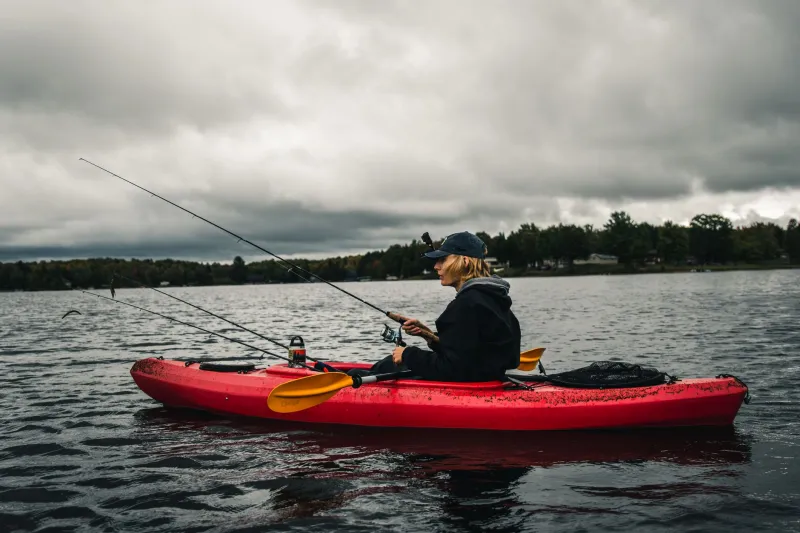
Let's just say it out loud: the kayak fishing industry has a gear problem. Scroll through any bass fishing forum or Facebook group and you'll find anglers spending more time debating pedal drives and fish finder mounts than they spend actually fishing. Meanwhile, the guy in a beat-up Old Town Vapor with a rod holder zip-tied to the side rail is quietly pulling largemouth out of spots nobody else bothers to look at.
We built that rig. We fished it hard for a full season. And we're here to tell you the $500 setup holds its own — and then some.
Start With the Hull: Used Is Not a Compromise
The single biggest money move you can make is buying used. The kayak market is flooded with perfectly functional boats from anglers who upgraded to pedal drives and never looked back. Sites like Craigslist, Facebook Marketplace, and even local paddle shops with consignment walls are goldmines.
Target a sit-on-top hull in the 10- to 12-foot range. Brands like Perception, Lifetime, and Sun Dolphin all have models that show up used in the $150–$250 range regularly. You don't need a Hobie. You need a stable, flat-bottomed platform that won't tip when you lean over to lip a three-pounder.
For this build, we sourced a used Perception Pescador 10 for $200 off Facebook Marketplace. It had a few scuffs and a faded seat cushion. It floated just fine.
 Photo: Perception Pescador 10, via www.thescifiworld.net
Hull budget: $200
Rod Holders: Functional Over Fancy
You do not need a RAM Mount system with articulating arms and stainless hardware. A pair of flush-mount rod holders from YakAttack or even a basic flush-mount kit from Amazon runs $20–$40 total. Drill them into the gunwale at a slight angle and you're done. If you're not comfortable drilling, a clamp-on rail system from Scotty fits most kayak side rails and costs about $35.
For this build, we used two Scotty flush-mount holders and a single RAM rod holder for the front. Total cost: $45.
Rod holder budget: $45
Anchoring: The System That Actually Matters
Here's where a lot of budget builds fall apart. People skip the anchor system and then spend every cast drifting off their target. In a kayak, boat control is everything — especially when you're working a laydown or a dock edge that requires a precise presentation.
Skip the fancy anchor trolley kits that run $80+. A basic DIY setup costs almost nothing. You need a small folding grapnel anchor (about $15 on Amazon), 30 feet of paracord, a carabiner, and two pulleys from a hardware store. Thread the cord through a ring on each side of the kayak — you can use through-hull fittings or just tie to existing carry handles — and you've got a functional trolley system for under $30.
Want even simpler? A stake-out pole from any kayak fishing retailer runs $25–$35 and works perfectly in water under four feet deep, which is exactly where most bass live anyway.
Anchor system budget: $30
Tackle Organization: Keep It Tight, Keep It Simple
A single 3700-series Plano tackle box fits on your lap or in the bow hatch of most sit-on-tops. Load it with a proven, minimal selection: a few soft plastic creature baits, a handful of Texas-rig weights, a couple of chatterbaits, and some topwater frogs. That's genuinely all you need for 80% of bass fishing situations in the US.
We added a small mesh bag bungeed to the front deck for quick-access items. Total tackle and organization spend: $60, including the lures.
Tackle and organization budget: $60
Paddle and PFD: Don't Cheap Out Here
This is the one place we'll push back on bargain hunting. A bad paddle will kill your shoulders and slow you down. A bad PFD might kill you outright. Spend the money here.
A mid-range fiberglass-blend paddle from Carlisle or Werner's entry-level line runs $80–$100 and makes a real difference on long paddles to remote spots. A Coast Guard-approved Type III PFD from NRS or Stohlquist can be found for $50–$70. These aren't areas to scrimp.
Paddle and PFD budget: $160
The Full Build: What You're Actually Getting
| Component | Cost |
|---|---|
| Used hull (Perception Pescador 10) | $200 |
| Rod holders | $45 |
| Anchor system | $30 |
| Tackle and organization | $60 |
| Paddle and PFD | $160 |
| Total | $495 |
Five dollars under budget. Not bad.
Real Results From Real Anglers
We're not the only ones making this argument. Marcus T., a tournament kayak angler out of central Tennessee, ran a nearly identical setup for two full seasons before upgrading — and he'll tell you his catch rate didn't change when he switched to a $4,800 pedal drive.
"I caught my personal best largemouth — six and a half pounds — from that old Pescador," he told us. "The fish didn't care what I was sitting in. I knew where they were, and I got there quietly. That's the whole game."
That's the whole game. Write it on your tackle box.
Why Cheap Rigs Actually Have an Edge
Here's the part that rarely gets discussed: budget kayaks are often better for bass fishing in certain situations. They're lighter, which means you can hand-carry them to spots that require a 200-yard hike through the brush. They're less conspicuous, which matters when you're fishing pressured public water. And because they sit lower in the water, they're naturally quieter on approach — a real advantage when you're stalking shallow-water bass.
A $5,000 pedal-drive rig with a full electronics suite is a serious machine. But it also weighs 90 pounds, needs a proper launch ramp, and announces your presence like a small parade. Sometimes the dumb-looking old kayak is the smart play.
The Real Investment Is in You
Spend your money on fishing licenses, gas to get to new water, and a few hours with a local guide who knows the lake you're targeting. That knowledge is worth more than any fish finder on the market. The fish are already out there. Your job is to understand where they are and how to get in front of them without spooking them.
The $500 rig gets you there. Everything else is just gear.