Dawn Patrol: Why Bass Anglers Who Sleep In Are Leaving Fish in the Water
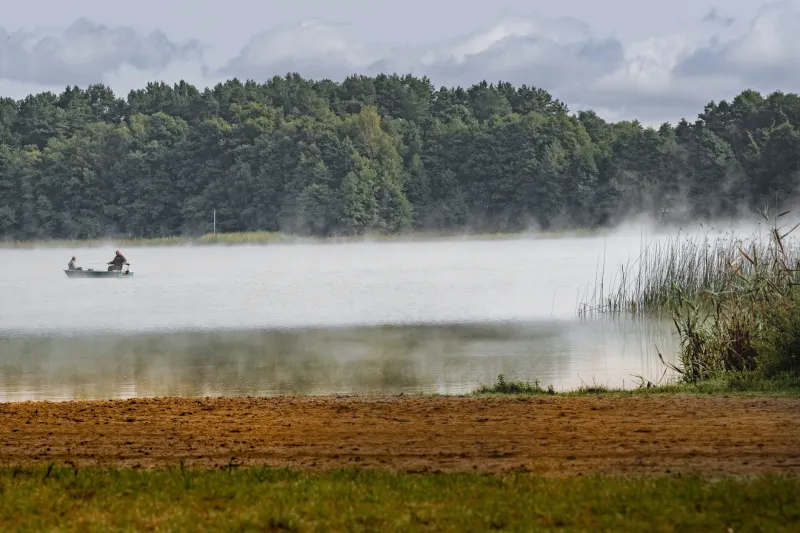
The alarm goes off at 4:45 a.m. It's dark. It's cold. The coffee isn't ready yet. Every reasonable part of your brain is telling you to roll over and give it another hour.
Don't listen to it.
That first gray light creeping over the tree line isn't just a pretty sight — it's the starting gun for one of the most aggressive and predictable feeding windows in freshwater fishing. And if you're arriving at the ramp when most anglers are just lacing up their waders, you've already missed the best part of the day.
Here's why those first 90 minutes are non-negotiable, what's actually happening beneath the surface during that window, and how your kayak gives you a serious tactical edge when it matters most.
What's Actually Happening Underwater at First Light
Bass aren't moody. They're biological machines responding to environmental cues, and first light triggers several of those cues simultaneously.
Light levels are the most obvious driver. Largemouth and smallmouth bass are ambush predators that rely on cover and low visibility to corner prey. In full daylight, baitfish have better visibility and can detect and evade a strike more easily. At dawn, that advantage disappears. Bass know this. The moment light levels drop to the point where they can close the distance on a shad or bluegill without being seen, they move.
Dissolved oxygen is the less-discussed factor, but it's just as important. Aquatic plants produce oxygen through photosynthesis during daylight hours, but at night that process reverses — plants consume oxygen. By early morning, oxygen levels in shallow, weedy areas are at their lowest point of the day. Bass move to better-oxygenated water near the surface or along wind-exposed banks, concentrating them in predictable locations that are easy to target from a kayak.
Water temperature completes the trifecta. During summer, surface temps peak in the late afternoon and drop steadily overnight. By dawn, shallow flats that were uncomfortably warm at 7 p.m. are now a few degrees cooler and far more hospitable. Bass that pushed deep to escape heat during the day will slide back onto those flats to feed before the sun drives them back down.
The Kayak Advantage: Stealth Is a Weapon
This is where kayak anglers genuinely have the upper hand, and it's not subtle.
A bass boat running a 150-horsepower outboard creates a pressure wave and sound signature that bass in shallow water can detect hundreds of yards away. Even on idle, a trolling motor generates vibration. During the dawn window — when bass are actively hunting in water that's often two to four feet deep — that noise matters enormously.
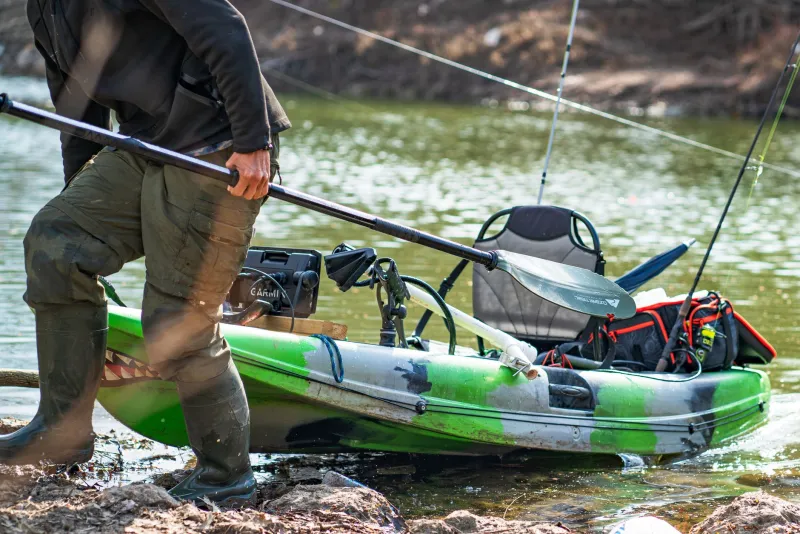
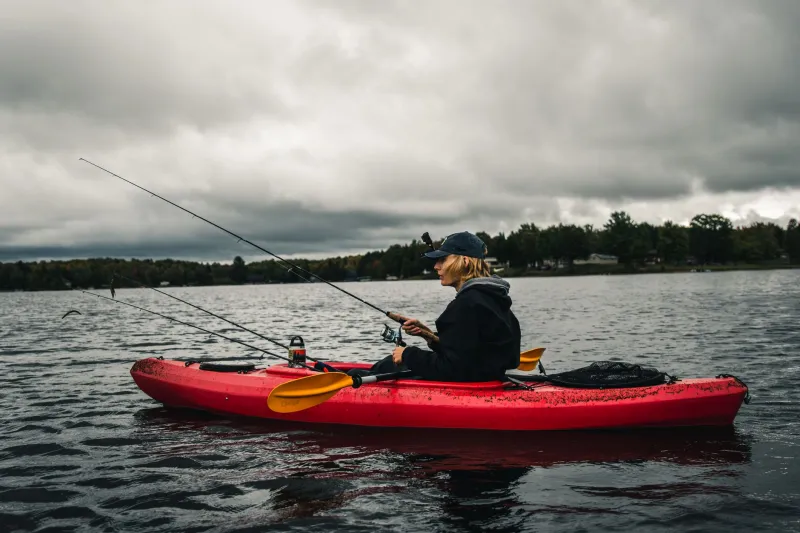
A kayak pushed by a paddle makes almost no sound at all. Done right, you can drift within 20 feet of a feeding bass without it registering your presence. That's not an exaggeration — it's a consistent experience that kayak anglers report across the country, from the lily pad flats of Florida to the rocky shallows of Ozark reservoirs.
 Photo: Ozark reservoirs, via dnm.nflximg.net
The key is approach technique. Keep your paddle strokes long and slow rather than short and choppy. Avoid letting the paddle blade slap the water on the recovery stroke. If you're within 50 feet of a target zone, stop paddling entirely and let momentum carry you in. In calm conditions, a single good stroke can glide you 15 to 20 feet without a sound.
Lure Selection for Low-Light Conditions
The pre-dawn and early morning window calls for a specific lure approach. Bass are orienting by vibration and silhouette more than by color and detail, which changes what works.
Topwater lures are the undisputed champions of the dawn patrol. Walking baits like the Heddon Zara Spook or Yo-Zuri 3DB Pencil create surface disturbance that bass can track in near-zero visibility. Hollow-body frogs work beautifully over matted vegetation and shallow grass flats. There is nothing in fishing quite like a topwater blow-up in the dark, and the dawn window is when it happens most.
Chatterbaits and bladed jigs are the go-to when bass are cruising just below the surface. The vibration blade creates a sound and lateral line signature that triggers reaction strikes even when fish aren't actively looking up. Throw these parallel to shoreline cover and work them back at a steady medium pace.
Dark-colored soft plastics — black, junebug, and dark green pumpkin — outperform natural colors in low light because they create a stronger silhouette against the sky when viewed from below. A dark creature bait on a light Texas rig, worked slowly through shallow grass, is a consistent producer during that transitional period when topwater action starts to slow.
Seasonal Breakdown: Applying This Year-Round
The dawn feeding window exists in every season, but the specifics shift with the calendar.
Spring (March–May): This is the peak season for early morning bass action across most of the US. Pre-spawn and spawn-stage bass are shallow, aggressive, and territorial. In the Southeast — think Alabama, Georgia, and the Carolinas — this window can start as early as late February. Target spawning flats and main lake points. The fish are there and they're angry. Topwater is deadly.
Summer (June–August): The window tightens but doesn't close. In the Deep South and Texas, summer surface temps can push 85–90°F by midday, making the early morning window even more critical — and even shorter. Be on the water before first light and work fast. By 8:30 a.m. in July on a Texas reservoir, the shallow bite is largely done. Focus on main lake points, secondary channel edges, and any shade-producing structure.
Fall (September–November): The dawn window expands again as days shorten and temperatures moderate. Fall bass are chasing baitfish — shad in particular — and early morning topwater on main lake flats can produce some of the biggest catches of the year. The Midwest and upper South (Tennessee, Kentucky, Missouri) shine during this window. Match your lures to baitfish size and work fast-moving presentations.
Winter (December–February): This one requires patience and geography. In the Deep South, bass remain somewhat active and will still show up in the dawn window on warmer days, particularly on black-bottom flats that absorb and hold heat. In the mid-Atlantic and Midwest, winter bass fishing shifts to deeper structure and slower presentations, and the dawn window matters less. Focus on days when overnight temps were mild and light levels are increasing — those are your best shots.
Getting There First
One practical note: the dawn window only works if you're actually there for it. That means rigging the night before. Load the kayak on the truck, pre-rig two or three rods, and lay out your PFD and paddle so you're not hunting for anything in the dark. The goal is to be on the water at first light — not pulling into the parking lot at first light.
Local knowledge matters here, too. The best dawn spots aren't always the obvious ones. Find a shallow flat with nearby deep water access, some form of cover (grass, laydowns, docks), and minimal boat traffic. On busy public lakes, that often means paddling away from the main ramp area to water that motorized boats don't bother with. That's your spot. Get there first, get there quiet, and let the fish come to you.
The alarm goes off at 4:45. You know what to do.